Summary of the AI Index Report 2026, Part II
What if the reality and the hype are bifurcating society on AI? Hello AI related infographics. 🗺️ A compilation with some field notes.
Good Morning, everyone
Thank you for supporting this publication. This is my primary income and I do my best to help you stay informed and keep you stimulated about AI at the intersection of business, society, technology and the future. The usual time the Newsletter goes out is 05:30 AM EST. However this can vary, more so in the Spring and Summer months.
I want to continue our visual tour of some of my favorite infographics and updates of the AI Index report, as well as other things related to the U.S. labor market, macro, geopolitical, the economy, future of jobs, GenZ trends, and related interests, primarily in infographic form.
To read the first issue of this series, go here.
Why Infographics
The Daily Spark by Apollo by Torsten Slok is another of my favorite sources for economic and macro infographics. What you find is not all Economists are honest in their incentives. The bifurcation of young people, post graduate entry level employment and AI really has me worried. It’s not the concerns you find in VC AI reports or Academic instructions with affiliations with BigTech. That’s part of the story I refuse to not tell. Infographics can quickly help orient ourselves among multiple data points that converge across spectrums of tech, economics and the future of jobs.
Because I want to do my best to display balanced coverage including some contrarian and skeptical insights that are purely my own and aligned with my own conceptual frameworks, this format of curation favors that.
Why so Anxious? AI is causing systemic division
AI can destabilize a consumer based economy, weaken democratic values and continue to warp Neo Capitalism, and it looks problematic for social unrest, wealth inequality and general rule of law. So why is that?
What happens if a kind of AI populism rises against the AI revolution? There’s a significant disconnect between Silicon Valley, Washington and the general population and real citizens, consumers and young people on this. Axios had this paragraph that stopped in me in my tracks: (I’m going to start a bit critical and realistic but I’ll eventually get to the AI Index part).
“Half of Americans are more concerned than excited about the use of AI, according to Pew, and Gen Z’s excitement about the technology sits at 22%, according to Gallup.”
It’s not just an AI paradox, it’s a legitimate AI risk that I’ve not seen Think Tanks and AI policy academics report on much. Bottom up consensus on AI is starting to form, and it’s contrary to what a lot of Executives, elites and BigTech lobbying has been suggesting. It’s this National divide in the U.S. with regards to the benefits and risks of AI that most concerns me.
But Something is not Right…
The more exposed we are to an Internet of AI slop (AIS) and even the potential of career ladder disruption, the less happy young people are starting to be with regards to their trust and hope that AI will bring a better world.
There’s a point where digital well-being plummets and the affordability crisis starts to impact youth unemployment and the way a culture sees its future with the prospect of AI. A Generative AI that’s not creating meaningful jobs, opportunities and is clearly weakening democracy. This isn’t a warped kind of AI populism, this is AI impacting the very human condition it’s supposed to be empowering, enhancing and augmenting.
We know that the Trump Administration created Energy Crisis with its attack on Iran with Israel is going to meaningfully increase inflation.
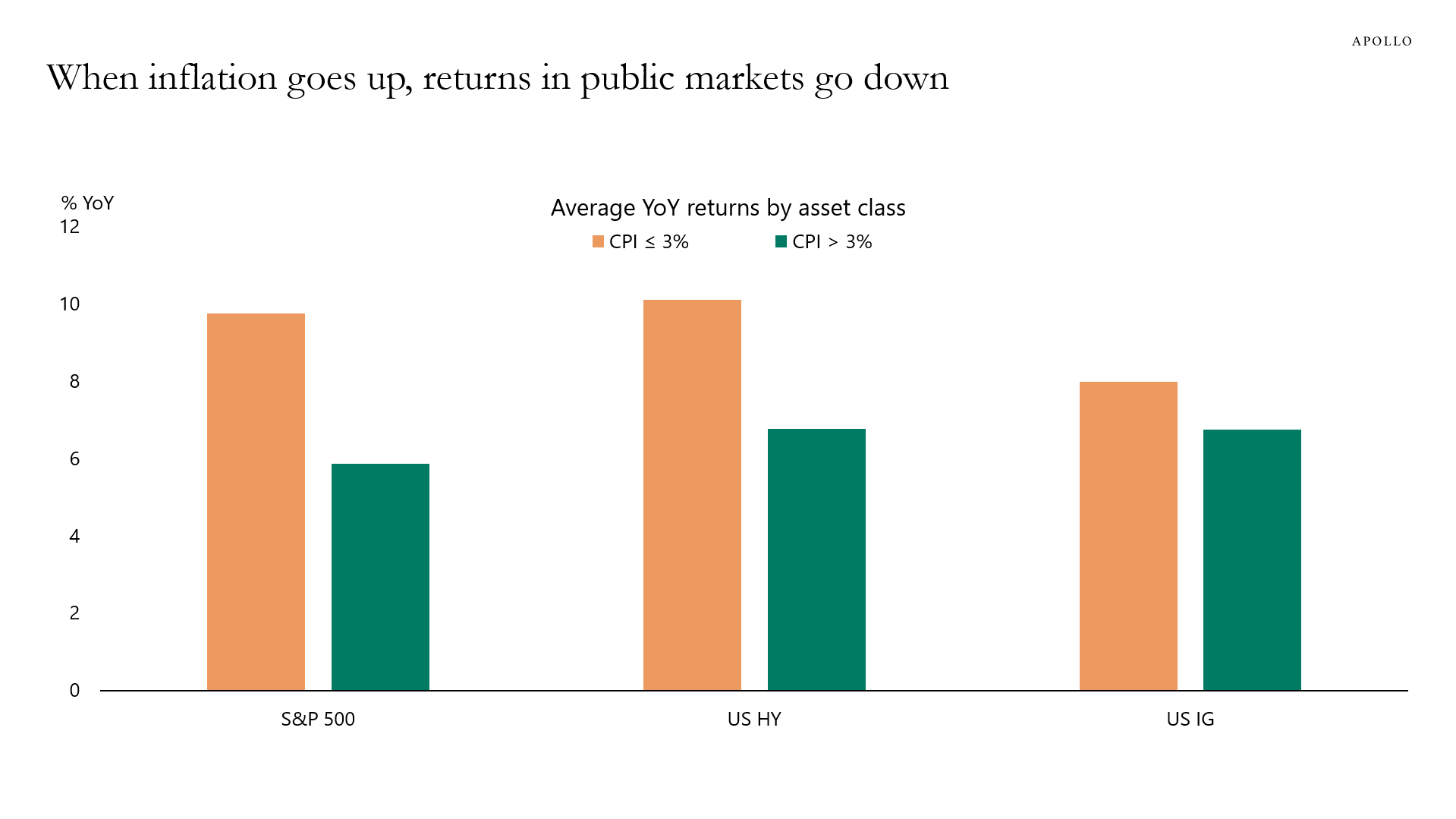
Eight weeks into the 2026 conflict (Operation Epic Fury), the global economic data suggests that the "disinflation" trend seen in early 2026 has been reversed. This should also worry those young graduates who are struggling to find entry level work in their industry because U.S. Administration policies and possibly even AI are pressing down their opportunities to participate in the labor force.
Why are Americans growing weary of AI?
How Americans view AI is deteriorating rapidly in 2026. Drawing on five years of Pew Research Center surveys - I believe the low consumer sentiment on the economy is seemingly being paired with the AI boom, in a K-shaped economy.
As of late 2025, 50% of U.S. adults feel more concerned than excited about AI’s increased use in daily life, while only 10% are primarily excited. As journalism is being eroded and VC-media is on the rise, if you follow LinkedIn or Twitter/X you’d think it’s a lot higher than those 10% who are excited. The American internet is no longer reflecting reality to such an extent GenZ are beginning to leave the legacy apps that started the internet.
The discontent around AI could signal the fall of the legacy U.S. advertising based internet.
A rise in AI anxiety stems from multiple issues, including degraded work opportunities. 18% of workers now believe it is "very or somewhat likely" their job will be eliminated by AI within the next five years, up from 15% in mid-2025. Anthropic, OpenAI or Microsoft making dire predictions isn’t helping and feels particularly tone dear and particularly harmful to the actual experience of people.
Got to give Tim Cook some Credit for Apple Management
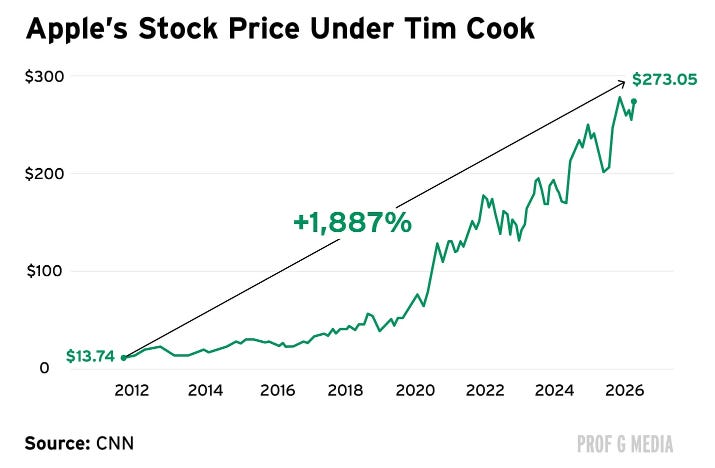
Steve Jobs was a tough act to follow but Tim Cook did as well as anyone could have expected. Let’s give credit where credit is due though, Tim Cook’s legacy is being cemented as one of the most successful corporate stewardships in history. Essentially, Cook transformed Apple from a "disruptive hardware company" into a resilient, $4 trillion global powerhouse. Take a bow.
Tokens > People & Workers
The Standford AI Index mostly reads like lobbying for the AI revolution and the same skewed narrative VCs funds typically report on with their vested financial incentives. As reported by 404 media and others, a new class of AI startups say they are taking money that would normally be used to hire people and are spending it on AI compute instead. What sort of horrible economics can we expect from this while Meta, Microsoft and others are cutting jobs and freezing open positions in favor of more compute?
AI can cost more than human workers now
With BigTech having leaderboards regarding token usage, the ROI of AI Infrastructure is still nowhere in sight. You can increase your Capex, IT budgets and hope for a better world, but what if it’s just a different world?
“Worldwide IT spending is expected to reach $6.31 trillion in 2026, up 13.5% from 2025, according to Gartner.”
As jobs inside Tech companies morph into vibe-working orchestration, the tone is shifting a bit more into what is the true value of a worker... human or digital, token or employee, efficiency vs. anticipating what agents will be able to do in six months from now. New incentives for a sustained low hire environment are forming. Increasing the anxiety of workers who know their tasks are more vulnerable to automation. This means they are asking for less wages.
Creative and Communal Deskilling
Young people who have grown up using ChatGPT in college understand the literacy/deskilling impacts AI is going to have on their generation:
The Dark side of Tokenmaxxing
AI does not appear to be enhancing our most human capabilities, like thinking creatively and forming meaningful relations with other people, or even to solve problems. Not according to Benchmarks sponsored by BigTech, but actual people. Yet nobody seems to be talking about it, why? This is not just about endangering our human rights (freedoms, independence, financial agency), but losing part of what it means to be human.
In Silicon Valley, the 2026 trend of tech leaders rating their employees’ productivity based on the number of AI tokens they use has a sinister slant and diabolical context. Tokenmaxxing might be a ploy of the elite class to squeeze more revenue from the AI boom, even when it’s not benefiting the majority of people and disrupting our lives in concerning ways.
Older generations are screwing GenZ from a better future. AI is further detethering a college education from a better future, the system is breaking.
American GenZ is turning ChatGPT Off in their Lives
According to the Gallup surveys:
“Just over half of Gen Z report using generative AI at least weekly — essentially unchanged from 2025. This leveling off stands in contrast to broader market trends, where worker access to AI rose by 50% in 2025 and the share of work hours spent using generative AI climbed from 4.1% to 5.7% in the same period.”
If AI was useful or a good product for them and if AI adoption was truly incredible, why would our youngest workers be turning against the AI slop generators and chatbots? Something is not adding up.
2026 is the year then that American GenZ negative sentiment toward AI has markedly increased. Why do you suppose that is?
According to the latest Gallup and Walton Family Foundation data, excitement for AI has plummeted by 14 percentage points in the last year, while "anger" has risen to become a dominant emotion (reaching 31%). This is not a reaction that Venture Capital or BigTech lobbying can put out. AI slop has made many of the apps they love almost unusable including YouTube, Pinterest, Instagram and so forth. GenZ’s infatuation with AI companion tools like Character.AI appear to be waning. It’s not just the novelty is wearing off, it’s something darker. AI is lowering GenZ’s hope in their future, which was already being challenged in multiple areas.
The AI Revolution has Generational Divides that will drive the future
Being forced to adopt an obviously flawed product that could harm them and hurt their mental health and financial future, is obviously not the best adoption strategy.
“The excitement (22%) and hopefulness (18%) that Gen Zers feel about using AI were already low last year and declined sharply this year, while anger (31%) increased and anxiety (42%) remained steady.”
This isn’t just marked skepticism, this is becoming the foundation for a future Anti-AI movement. If we aren’t caring for our young people and their needs, what sort of society are we even planning for? Gen Z remains skeptical of AI’s positive impact on core skills and productivity, but are even more worried about its impact on their relationships, connections, identity, sense of meaning and future job prospects.
Just Over 1 in 5 GenZ Americans Feel obliged to use AI Daily
GenZ Increasingly Negative over Impacts of AI
Young people aren’t excited, and many are forced to be curious, not by choice but by occupational necessity. The tech for the most part isn’t augmenting their future prospects, and they don’t trust it (sorry Ethan Mollick).
OpenAI, Microsoft, Meta and peers are Pioneering the next stage of Surveillance Capitalism
I don’t think I have heard such a naked exposition of the centrality of surveillance capitalism to the development of OpenAI than this 54 second clip from Sam Altman. OpenAI in particular seems very interested in exploiting Surveillance for profit.
Sam Altman sounds like he’s taking talking points from Peter Thiel when he says:
“These models are still quite dumb, relative to what they will be, but, more than that, they have quite limited awareness of your life, you are still having to, like, massage them and cajole them, to try and get the thing that you want.
We are no longer that far away from a model that just knows all of your contacts, it knows about you, it knows about your life, it knows what your doing, it knows what you care about, it knows about the people in your life, it has access to your computer and your browser (if you want, of course) and it has access, maybe increasingly over time, to what is going on in the real world around you.
That is going to be a complete change to what it feels like to use a computer, and what it feels like to use AI, and I am tremendously excited about that. But I don’t think even we have a good intuition yet for what that’s really going to feel like”
But is that the world we even want? See the video:
As Shoshana Zuboff wrote in her seminal book 'Surveillance Capitalism, there is no end to the drive for data, other than totality. Stipping value from people and their private data and right to privacy, into the hands of corporations. It doesn’t help that Microsoft owns 27% equity in OpenAI. As Karen Hao writes, the push for data disproportionately falls on GenZ, generational Alpha and yes, those “already vulnerable populations, including children.”
We have to resist this. This is not conducive to a technology that benefits humanity.
China has blocked Meta’s Manus AI Acquisition
The makers of Manus AI did a “Singapore-washing” model maneuver, and got penalized for it. In late April, 2026. The decision to prohibit foreign investment in Manus was made in accordance with laws and regulations, the National Development and Reform Commission (NDRC) China’s Top Economic planner, said in a brief statement. Meanwhile, Beijing has increased efforts to discourage Chinese AI founders from moving business offshore.
From my limited understanding of this case, the NDRC cited national security laws and technology export regulations. Although Manus is headquartered in Singapore (often referred to as "Singapore-washing"), Beijing ruled that because its core technology was developed in China, the sale constitutes an unauthorized export of strategic AI assets.
All this manipulation and China is not having it. Reports indicate that Manus co-founders, including Xiao Hong and Ji Yichao, have been barred from leaving China for "regulatory consultations," with some sources suggesting their passports were seized.
Manus said it had passed $100 million in annual recurring revenue (ARR) in December, eight months on from launching a product, which it claimed made it the fastest startup in the world at the time to hit the milestone from $0. The claim is not technically true. Perplexity has seen similar ARR recovery due to its similar product called Perpelxity Computer.
Meta had rushed the Manus AI integration into its company so the unwinding is going to be expensive and unwieldy on the logistics side. It also weakens, in my opinion, Alexander Wang’s position at the company. He was the primary driver behind Meta's attempt to acquire Manus AI.
The Philadelphia Semiconductor Index (SOX) is up 18 Days in a Row
In a Semiconductor boom without precedent. It’s the longest winning streak on record. The index tracks the universe of semiconductor companies. After a brief dip in late March (bottoming out at 7,142.33 on March 30), the index began its historic 18-day climb, resulting in the parabolic growth seen in April, 2026.
White GenZ Americans might be falling behind in AI
Six in 10 Asian Gen Zers and nearly as many Black Gen Zers (57%) use AI on at least a weekly basis, compared with about half of their White (47%) and Hispanic (52%) peers. Almost one in four GenZ white Americans among K-12 students never uses AI.
Will AI push GenZ to Start their own Businesses?
According to a recent study by ZipRecruiter, a survey of 1,500 class of 2025 graduates and 1,500 soon-to-be class of 2026 graduates—nearly 38% are considering starting their own business, 32.5% are looking at gig work, 28% are exploring freelance work, and 11% are pursuing the skilled trades.
Their Graduate repot insinuates that Grads fear AI is limiting entry-level jobs, and most schools aren’t preparing them for it. This is making graduate younger GenZ more adaptable and possibly more entrepreneurial.
Scarcity, AI and the Entry Level Jobs Dilemma for Younger Consumers and recent Grads
Research on AI and the labor market is still in the first inning
The impact of AI on the labor market is not as big as you might expect and the research and data also is fairly nascent when you dig a bit deeper contrary to PR by OpenAI, Anthropic or VCs.
“Importantly and somewhat confusingly, there are now numerous AI exposure and usage measures being used in AI research, and they do not entirely agree. AI exposure and AI usage are different concepts, and many occupations rank differently on exposure than on usage, as shown in Gimbel et al. (2025; figure 1).” - Source.
O’ Switzerland? An AI-centric Society?
The AI Index did surprise me on one front. Switzerland has ranked first in the world for AI researchers and developers per capita, according to the 2026 AI Index Report published by Stanford University’s Institute for Human-Centered Artificial Intelligence, reinforcing its position as one of the world’s leading environments for artificial intelligence talent and adoption.
Who knew? Singapore is one thing, but Switzerland? But yes, Switzerland’s AI adoption rate stood at 34.8% by end of 2025, above the European average of approximately 27% and ahead of the United States (28.3%). AI job postings as a share of all postings reached 1.59%, above Germany (1.13%), France (0.99%), and Austria (0.84%), suggesting stronger hiring momentum for AI skills in the Swiss labor market than in neighboring economies.
West Switzerland a Hub to Watch
Switzerland’s AI leadership is reflected across Western Switzerland, where a dense network of universities, research institutes, and industry partners is advancing artificial intelligence across multiple sectors. As you might know, At the core of this ecosystem is the Swiss AI Initiative, co-led by EPFL and ETH Zurich, which involves more than 800 researchers and provides access to 20 million GPU hours annually. I would agree with the statement that Geneva, Switzerland plays a distinctive dual role, as both an innovation hub and a global center for AI governance.
Young Graduates Appear to have Highest AI Exposure
Several high-profile research efforts have combined AI exposure or usage measures with recent occupational employment data in order to analyze how employment trends correlate with an occupation's AI exposure or usage. Brynjolfsson, Chandar, and Chen (2025) merged their preferred AI-exposure measures with detailed employment records from payroll processor ADP, whose data include very specific occupational detail and demographics.
They continue: “They found employment fell more for young workers in occupations with higher AI exposure but not in occupations with lower AI exposure; differences in employment changes by occupational AI exposure for older workers were minimal. They found employment fell more for young workers in occupations with higher AI exposure but not in occupations with lower AI exposure; differences in employment changes by occupational AI exposure for older workers were minimal (figure 2).”
Keep in mind here, As of 2026, Gen Z is roughly between 14 and 29 years old. Many are graduating into the labor force at a time when the U.S. labor market is stagnating for whatever reason.
It’s not clear what kind of a world Generation Alpha will inherit after Zoomers. As of 2026, Generation Alpha is roughly between 0 and 16 years old. The oldest of Gen Alpha will be reaching college soon.
Read our coverage of Part I.
Follow along in the 400 slides here.
AI Index 2026
Finally let’s continue our exploration of the AI Index report that’s over 400 slides.
The Rise of Open-Source AI and Developer Projects
2025 marked a sharp increase in Open-source AI projects as for instance on seen on GitHub. A variety of Chinese AI open-weight models have arrived after the DeepSeek event of January, 2025. DeepSeek-R1 on January 20th, 2025 is one of the most pivotal moments in the history of Generative AI so far. DeepSeek has yet to announce its flagship R2 model.
Model Quantity and Quality Continues to Improve at a Rapid Rate
AI Video Models Improved in Leaps and Bounds in 2025
Over 5% of LLM Downloads had to do with Video generation in the 2022 to 2025 period on Github, rising rapidly in 2025.
Top AI Conferences by Attendance
Publications in Generative AI Subdomain are Increasing since 2022
To be clear though, Machine Learning and Computer Vision topics still dominate academia related to AI.
Generative AI is actually taking a lot of funding away from other areas both in academia and startups.
The Strongest Predictor of AI adoption among GenZ and Alpha are AI adoption of Parents
The extent to which Gen Z K-12 students use AI is closely tied to parental use. Frequent parental use is associated with significantly higher daily and weekly use among their children, while children of non-users are far more likely to report infrequent or no use.
I will note that in general AI adoption is higher in higher-income bracket Parents.
Some studies indicate that GenZ high traits like “curiosity and Openness” are significantly correlated with early and frequent Generative AI adoption.
The single strongest predictor of usage intensity is perceived usefulness. However the majority of usage by students is simply for research. K-12 GenZ are not necessarily highly likely to be Generative AI power-users. Usage for AI companionship is more likely.
Negative Sentiment about AI is Increasing Rapidly in GenZ
When asked how AI makes them feel across five dimensions — curiosity, anxiety, anger, excitement and hopefulness — Gen Zers express mixed emotions. Outside of curiosity, Generative AI doesn’t elicit many positive emotions for younger users in the United States.
More High Quality Papers are Starting to Come out of China
The Less GenZ Use AI - They More Negative about it they tend to be
China Dominates AI related Patents by Number
China’s dominance in AI patents is a result of a massive, state-directed pivot toward "AI Sovereignty." While the U.S. continues to lead in private investment and "breakthrough" model impact, China has built an overwhelming lead in the sheer volume of intellectual property, accounting for roughly 61% to 74% of all global AI patent filings as of 2026.
It’s not clear to me how this translates into the future. Things like the Singapore-washing of Chinese startups decreases trust in Chinese based startups. Foreign capital investment has also meaningful declined in China in recent years.
AI Patents Per Capita (a fairly good measure of innovation)
South Korea
Luxembourg
China
United States
Japan
Singapore
Germany
But How do you measure Innovation?
AI talent density is a tricky thing as well when it comes to patents. Government and industry policy matters.
“In 2025, the largest share of identified AI authors and inventors came from the United States (220,520), followed by India (50,460) and Germany (48,520) (Figure 1.8.1). The United Kingdom (34,370), Canada (31,450), and France (18,820) formed a second tier with Australia, the Netherlands, Italy, Brazil, Switzerland, and others making up the broader distribution of contributors.”
United States
India
Germany
UK
Canada
France
Australia
GenZ Appears Ultra Aware of the Deskilling and Learning Risks of AI
Speed means you can skip steps, but is that good for learning? 🤔 For GenZ who have had Gen AI possibly in high school and college, admit that AI makes future learning more difficult.
Maybe the most ironic part about this is how little they end up trusting its output in their professional lives when it comes to “Workslop”. Similar skepticism colors how employed Gen Zers view AI’s role in their professional lives.
Top Authors and Inventors Per Capita
Switzerland
Singapore
Sweden
Finland
Netherlands
Canada
This has a lot to do with the strength of institutions, education systems and funding for R&D. Countries with smaller populations also rank more easily in such a metric.
AI Authors and Inventors by Specialization
Singapore is good in Computer Vision, South Korea is good in Hardware. Denmark is good in Healthcare. Israel is good in Machine Learning. U.S. is good in Software Engineering, Australia is good in Bioinformatics, fairly interesting to think about.
So we’ve ended on just slide 71 of the 400 slide AI Index Report. I think this is a good point to end for today. Follow my Notes for other insights related to tending AI news in case you use the platform’s app. These days I find myself less active on LinkedIn and other social media.
See you next time, thanks for reading.


Your reflective question about what kind of society we’ve become where the signaling is clear that there is little interest in supporting our youngest generations as they learn to become contributing members of society is so right on.
It’s pathetic to witness such a wide range of Boomers, Xers, and Elder Millennials in mainstream business world exhibiting such a deep lack of understanding of the role of multigenerational opportunity in enabling a stable/peaceful society.
My only comfort is the Zoomers have the potential to be pressurized by the dark dehumanization and transform their world into a place that is brilliantly creative and independent, authentically human and connected to the natural world and to each other in deeper and meaningful ways than we’ve ever seen before.