As many of you know, I’m fairly concerned Generative AI is accelerating wealth inequality. But how would that take place in a deteriorating labor market? What if we are witnessing history, but not the uplifting kind. 😕
While Tech owned social media and with Venture Capitalists boosting AI tech optimism narratives (disconnected from both workers and the K-shaped economy), what’s the more realistic side to all of this? And could AI disrupt some of how capitalism and capital markets work themselves? What if AI is not a great collaborator like we are being promised that empowers, but a great destroyer?
I’ve been reading and contemplating the influential report by Citrini Research: "The 2028 Global Intelligence Crisis"that is a fairly speculative "memo from the future" that explores a scenario in 2028 (you know because AI 2027 was already taken) where AI succeeds so rapidly that it “breaks the modern economic engine.”
This report actually did lead to IBM’s worst stock drop in 20 years doing down over thirteen percent ( IBM 0.00%↑). Among other companies named in the report as being more vulnerable on Monday. What worries me is the question of whether the lack of job creation from Generative AI is transitory or permanent. It’s debatable to me whether the Global Intelligence revolution is even real, and if the AI movement can lead to negative growth. If you care about humanity and actual people, these issues are concerning regarding AI’s impact.
But if you are in the business of exaggerating and speculating, why not do some fear-mongering while you are at it. Markets don’t care about the affordability crisis of real people, but they do about the prospect of potential business disruption and automation that could lead to negative feedback loops impacting stocks where they store their wealth. The Citrini Report led to some fairly elaborate Twitter commentary, and actually appeared to move markets on Monday February 23rd, 2026. Today I’m watching Anthropic’s event: The Briefing: Enterprise Agents. Do they time this stuff?


The Enterprise AI Acceleration
Are Cowork plugins the beginning of a wide range of customized workflows towards a more agentic AI? Let the “plugin games” begin. Who needs hunger games when you have AI.
Plugins make AI more Accessible to Automate Tasks
Claude with plugins re-imagines some of what can be automated in some companies changing roles and responsibilities within early adopters. We will soon see dozens of companies offering similar productivity enhancing capabilities. Cursor already has a similar competitor marketplace and available on Github. You can only imagine Google and others have their own. (see above poll, or LinkedIn version).
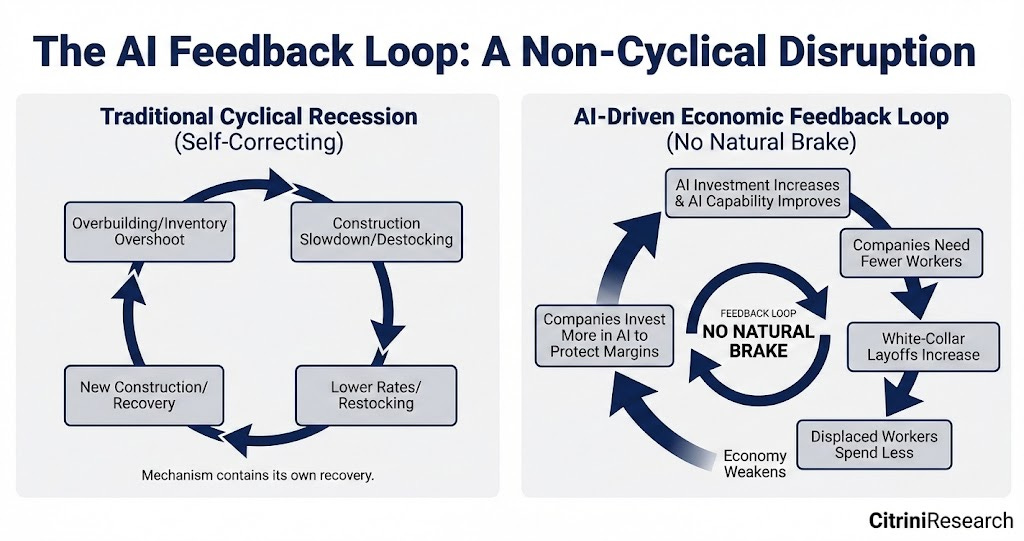
Scenario Concerns ✨ (June 2028 Hypothesis)
The Citrini Report does highlight some potential risks: (what follows is an outline of their 2028 hypothesis):
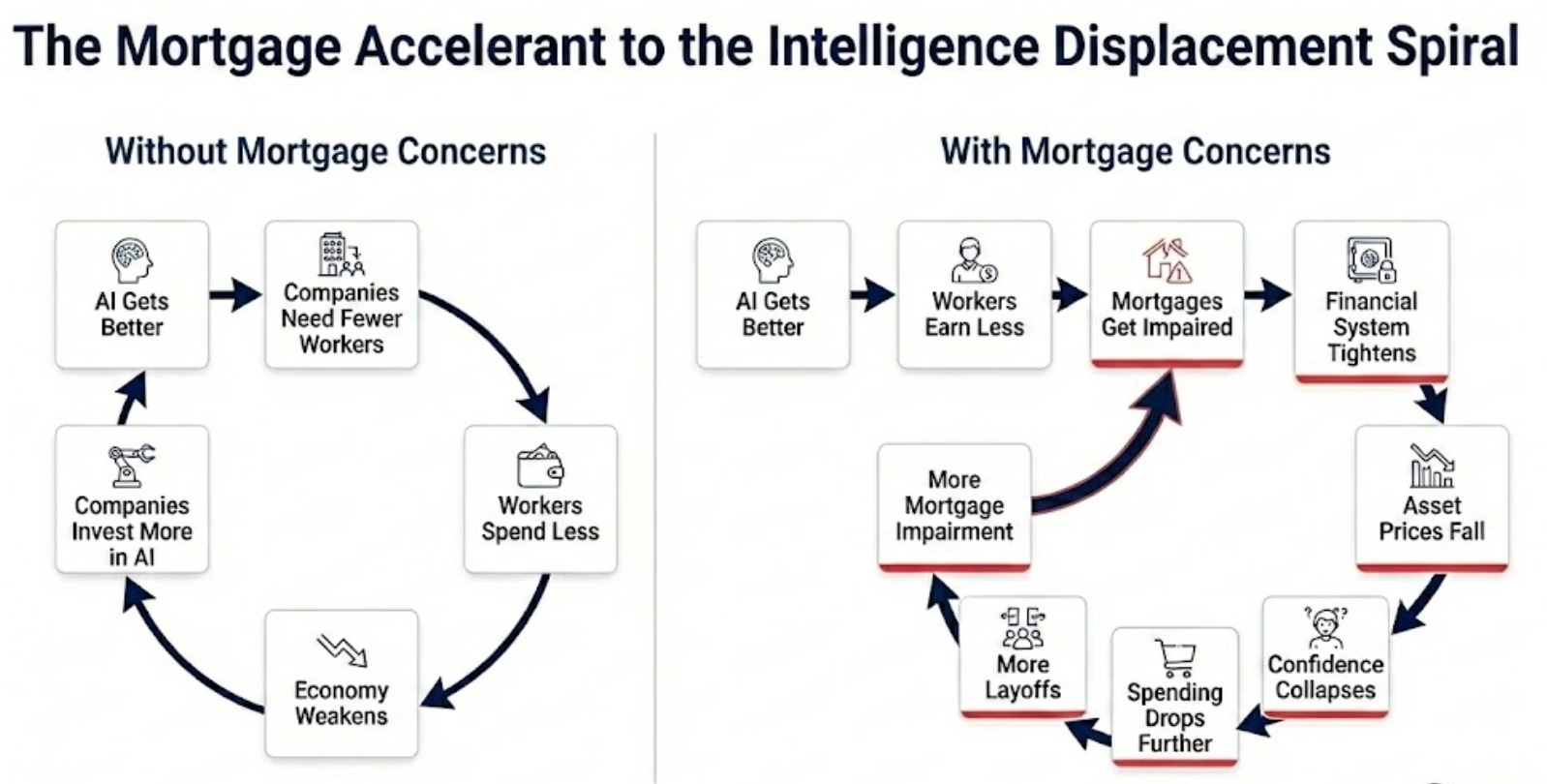
In the Citrini thought-experiment, AI could creates an “Intelligence Displacement Spiral”
White-collar sectors and some knowledge workers face severe disruption first
The Rise of "Ghost GDP": While nominal GDP and productivity appear strong due to AI efficiency, the report describes "Ghost GDP"—output that shows up in national accounts but fails to circulate in the real economy because AI agents do not spend money on discretionary goods, housing, or services.
Macroeconomic fallout intensifies: Unemployment rises to 10.2%, JOLTS job openings plummet 15% YoY, initial jobless claims surge (mostly white-collar), and labor’s GDP share falls to 46% from 56%.
Financial system comes under strain: Private credit sees cascading defaults (e.g., $18B software debt downgraded, Zendesk facility marked down sharply); the $13T mortgage market risks impairment as prime borrowers in tech hubs face income shocks, driving delinquencies and home value drops (e.g., 11% YoY in San Francisco).
Please read the full Report and share your own opinions about it if you are so inclined.
Are we destined for AI-driven negative displacement spirals?
In my search for whether AI will lead to accelerated wealth inequality, I found one of the best sources I could in Jeremy Ney of American Inequality Newsletter. Jeremy Ney is an author, researcher, and data scientist best known for his work on the "American Inequality" project.
American Inequality
Data on U.S. inequality and regional divides. Covering all things housing, healthcare, poverty, education, tech and more.

Jeremy is a serious academic researcher, whose primary thesis is that inequality is interconnected and goes far beyond simple income figures. He also holds extensive Substack Live interviews and sessions.

Few people on the planet have such a nuanced and data-driven understanding of American inequality than Jeremy. He’s now working on a book as well. His commitment to the niche of American inequality goes deep.

Why does inequality matter?
American Inequality | Income Maps
Public Data Is Under Siege: Why It Affects You
Why poverty is rising in America
Why homelessness just hit a 15-year high, rising 12% from last year
If you think American inequality is an important issue, consider supporting the author with a paid contribution to access all of his data and research.
If you prefer listening on the go:
Generative AI and Inequality
By Jeremy Ney, February, 2026.
Jeremy Ney is the author of the American Inequality Substack and a professor at Columbia Business School.
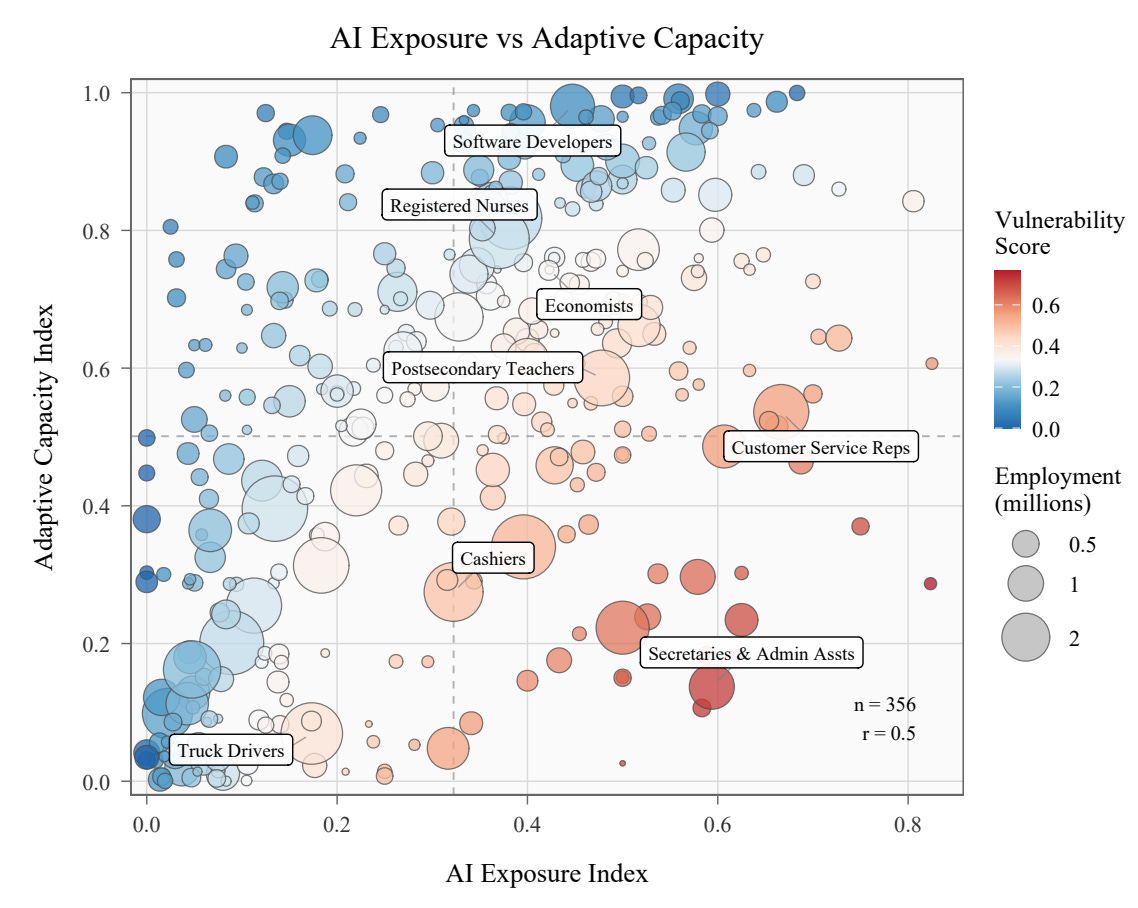
There is no doubt that AI is coming for some jobs, but the overwhelming question is - who is most at-risk of job loss and how long is the pain going to last? Are Amazon warehouse workers first in line for job loss or are the consultants, software developers, and financial analysts going to feel the pain of the first wave? A new consensus is emerging that focuses on jobs “exposed to AI” and identifying workers who have the skills to land back on their feet when AI comes knocking at their door. New data analysis of these AI-exposed jobs reveals that there are 3 categories of workers who face the biggest threats from this technological shift. Regardless of the worker category though, there’s a more sinister inequality that is taking shape.
The Age of the AI Aristocracy
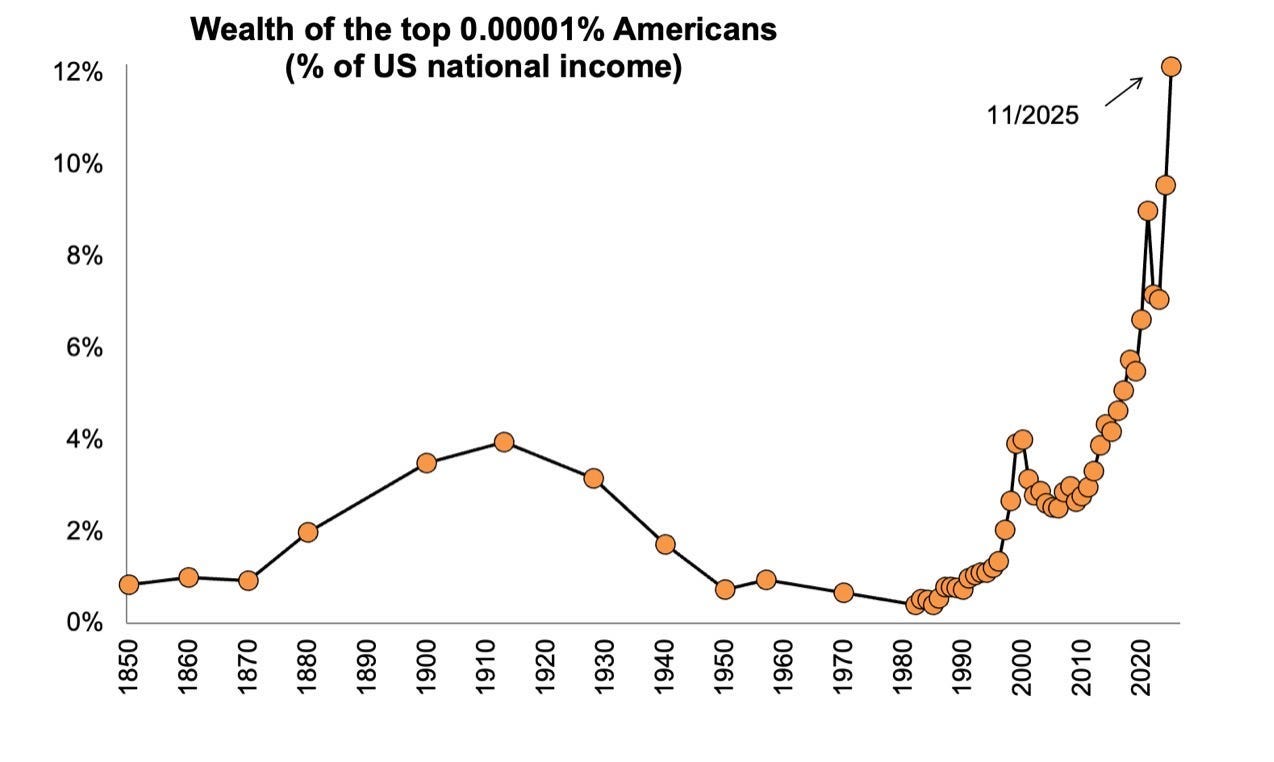
A small number of people are getting incredibly wealthy off this AI revolution. During the AI surge of the past two years, the top 10% of households saw their wealth increase by $5 trillion in a single quarter (Q2 2025), while the bottom 50% saw a gain of just $150 billion, or a 33x gap. The bottom 50% of Americans own just 1% of all U.S. stocks, meaning that the gains accruing to Nvidia or Microsoft don’t flow through to millions of households. A new AI Aristocracy seems to be emerging, fueling the rise of a handful of ultra-wealthy households. In 1910, the richest 0.00001 percent of Americans owned wealth equivalent to 4 percent of U.S. national income. Today, that number has risen to 12 percent. The wealth and power of oligarchs far exceed their Gilded Age peak. In other words, we’ve passed peak robber baron.
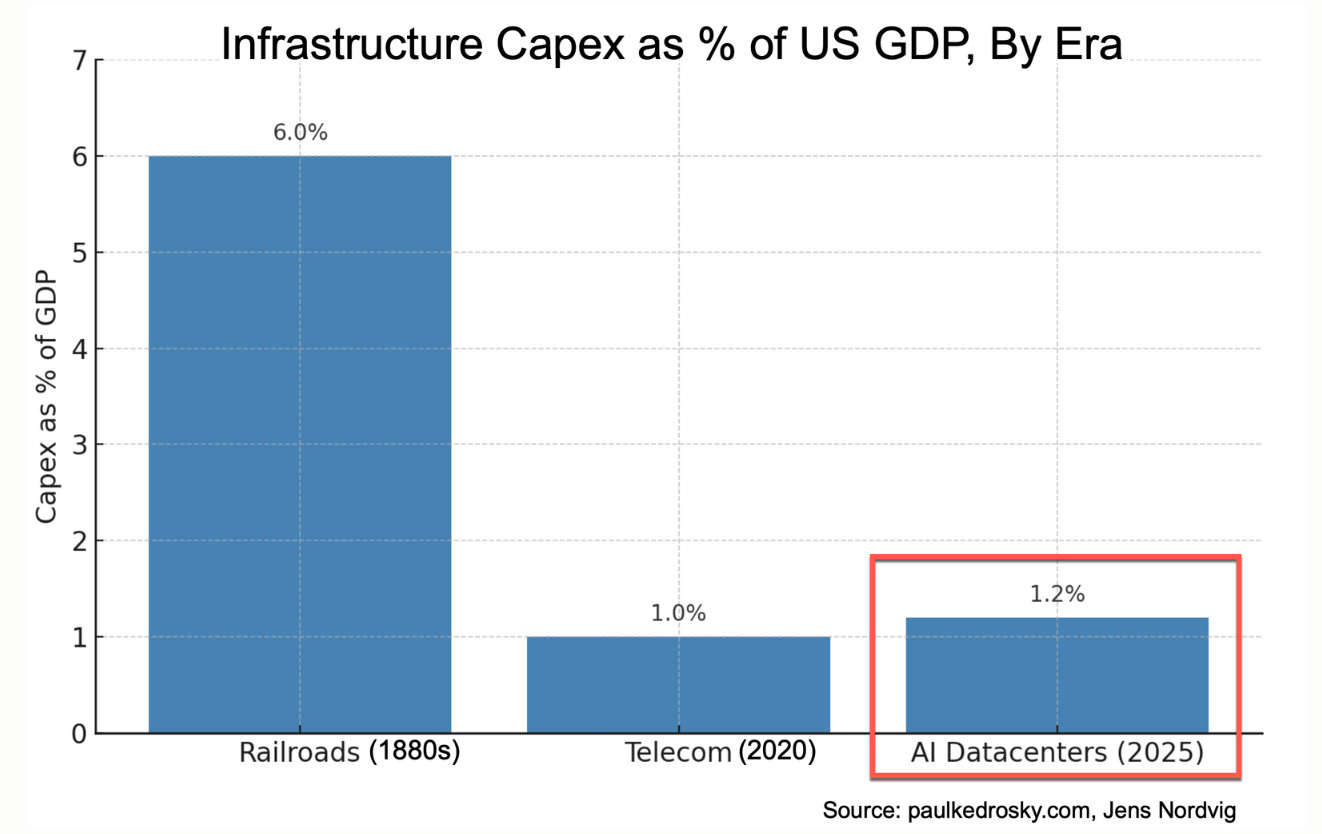
The economy is now divided split in two: AI stocks are propping up the S&P, accounting for 60% of gains over the last 2 years, and helping just a few households pull ahead. When we talk about robber barons, AI datacenter investment is still only one-sixth the railroad investment of the 1880s, but the returns for just a few Americans is now far higher. Corporate profits are at some of their highest levels in the last 80 years even though American workers just took home their smallest share of the nation’s wealth since 1947. The money is there, it just isn’t going to most Americans who are now having to pay higher electricity bills while getting paid less for the same work. For the rest of America outside of the AI Aristocracy, here are those who are going to face the biggest threats of inequality posed by this technological shift.
People at the Extremes of the Age Distribution Are Losing Their Jobs
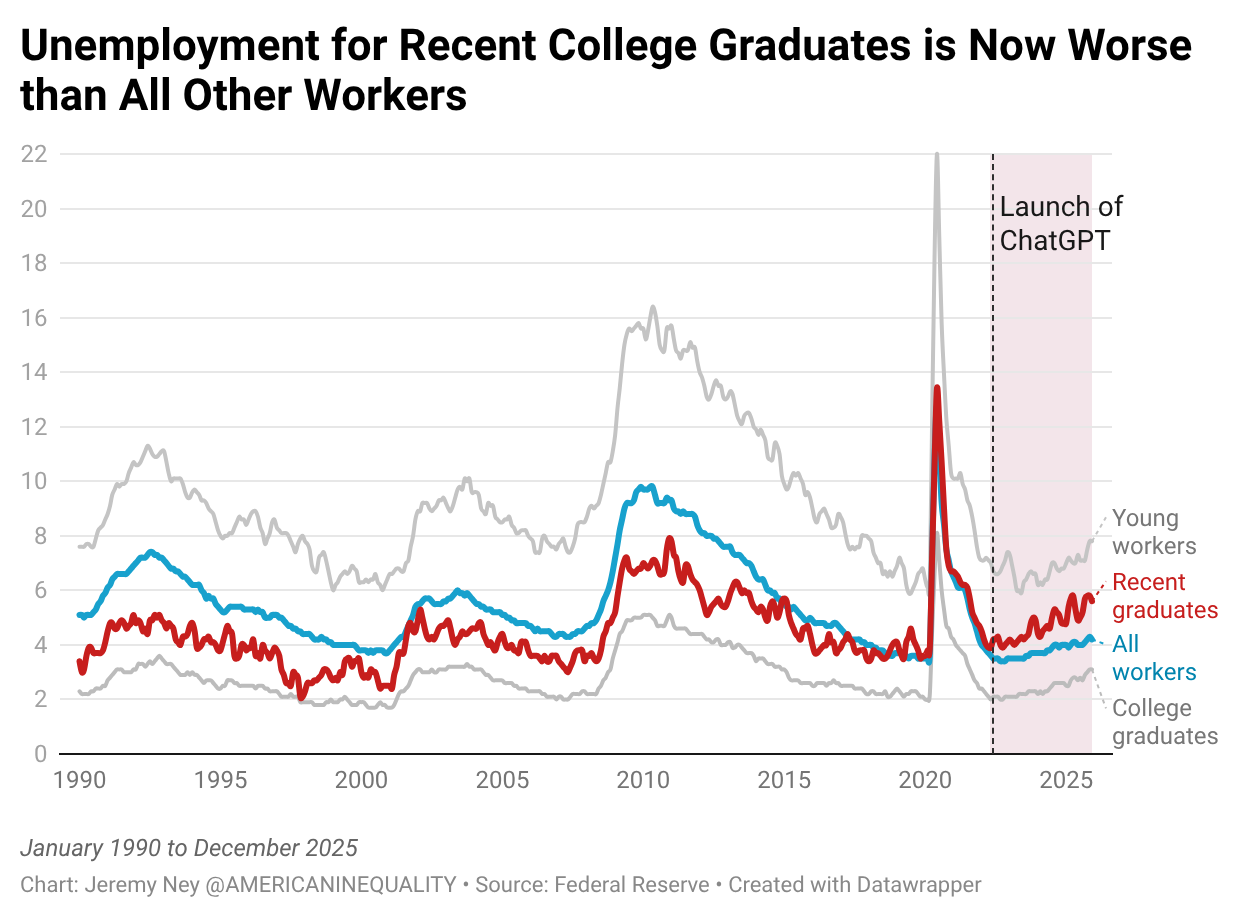
Recent college grads are facing one of the worst job markets in decades. For the first time in our recorded history, recent college grads have higher unemployment rates than all other workers and have faced a worsening job prospects at finding jobs. Stanford economists found that young workers aged 22–25 in “highly AI-exposed” jobs, such as software developers and data analytics experienced a 13% decline in employment since the advent of ChatGPT. These young workers haven’t yet built the skillsets to transfer into other jobs, and their lower set of skills overall means that advanced AI tools can often accomplish the same type of work that a company once had to pay a college grad $50,000-$150,000 to accomplish.