Tensions mount over AI Consequences on the Future
Silicon Valley's AI success is starting to create more economic suffering for the rest of us. Finance industry poised for mass automation.
Good Morning,
AI Supremacy is a Newsletter that explores the impact of AI on the future of business, technology, culture and society.
This is starting ot mean a lot for the lives of different kinds of people, consumers, investors, graduates, entrepreneurs, citizens and residents. The pressure of AI on real people and their communities is becoming more tangible this year.
A Pivotal AI Week Ahead
With Google’s I/O Conference starting tomorrow, Nvidia Earnings and the SpaceX IPO filing, this might be one of the most pivotal weeks in AI of 2026 (week of May 18th). Elon Musk is expected to start meeting with investors very soon ahead of an IPO for SpaceX, which was valued at $1.25 trillion after merging with xAI in February. I’m noticing a lot of subplots in the AI ecosystem in a rather bizarre geopolitical, inflation, bond story and Silicon Valley backdrop. Let’s dive into some of the most important among these.
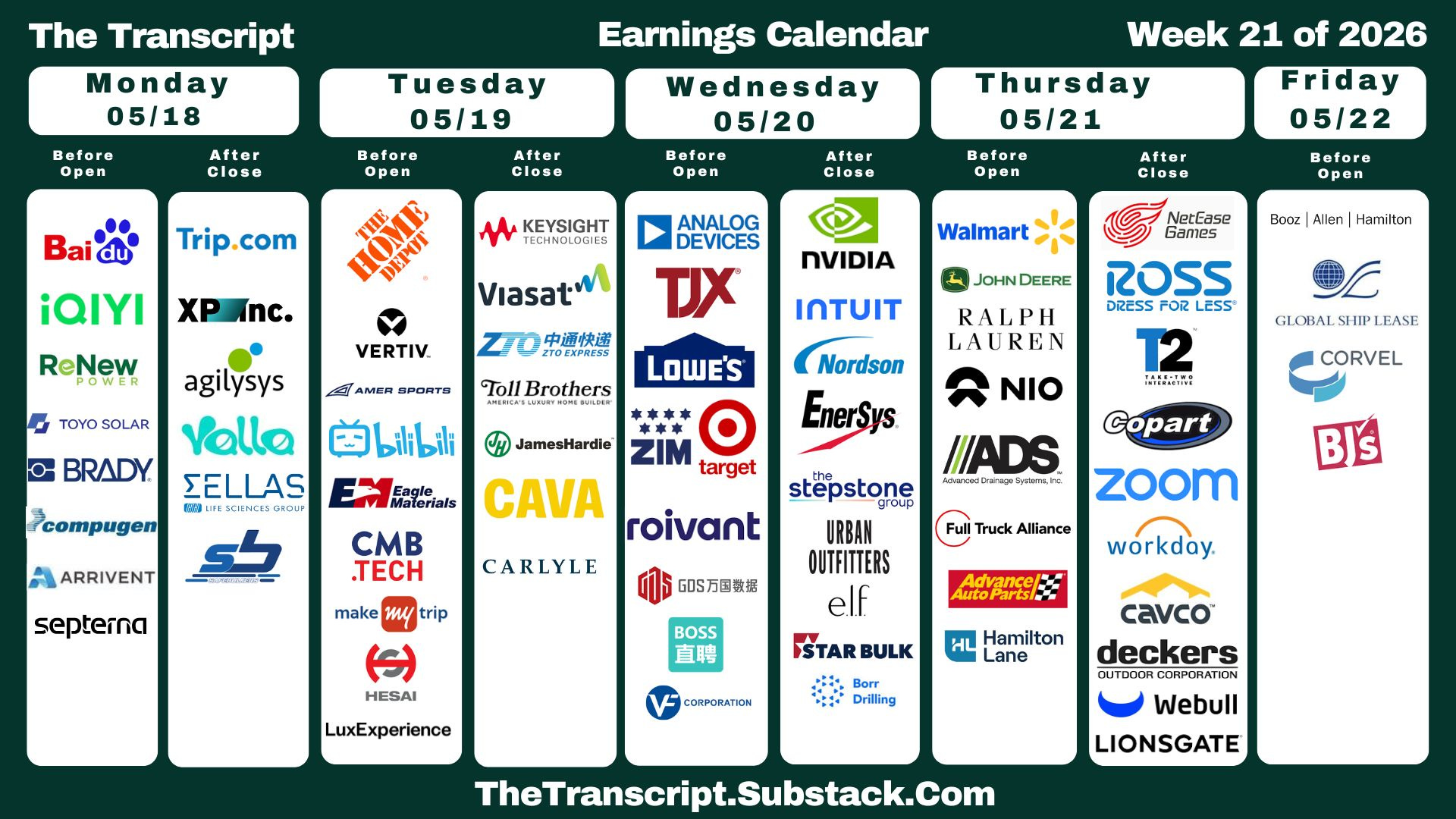
Earnings Calendar this Week
Last week Anthropic announced Claude for Small Business, less than a year now from its IPO likely in December, 2026. You hear a lot of stories of SMBs struggling to implement Generative AI technology. This is especially true in an era of rising backlash against AI slop, datacenters and Billionaire incentives to praise the AI era as if it’s going to save us all.
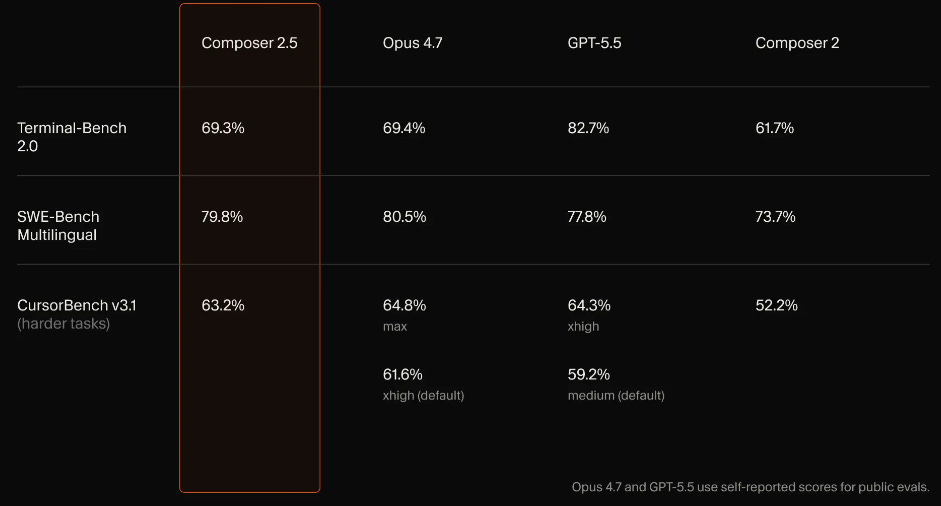
At the time of writing today, Cursor released Composer 2.5, and I believe after Anthropic, Anysphere is one of the top B2B and Enterprise AI startups. From a product perspective I think this improves or at least enhances Cursor’s in-house model intelligence, long-running agentic behaviors, and the overall team development ecosystem within its IDE. Cursor is becoming known for its ability to multitask its strong parallel processing with async subagents.
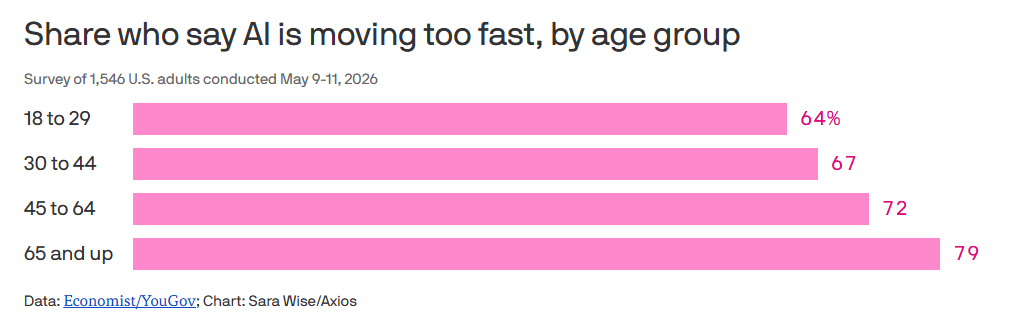
The midpoint of 2026 marks an extremely cringe time in the history of AI, where entry level jobs are being impacted, and people are already extremely fed up. According to Axios, the “disdain spans generations” and political parties. An Economist/YouGov poll released this week showed over 70% of Americans think AI is advancing too quickly, with 68% of Republicans and 77% of Democrats saying it’s moving too fast.
The American Billionaire AI Rush 2026-
Capital, compute and the AI boom of elitism. What’s taking shape is not necessarily making many of us more hopeful about the future.
With three huge IPOs, SpaceX, Anthropic and OpenAI supposedly all coming in 2026 or early 2027, there’s a lot of capital at stake for a lot of rich people and Venture Capital funds, BigTech and the perception that America is ahead in AI.
A jury in Oakland, California, ruled against Elon Musk in his dramatic court battle with Sam Altman and OpenAI. Sam Altman is among a new breed of AI Venture Capitalists that are powerful angel investors while assuming CEO duties of one of the most powerful AI startups ever in OpenAI. I’ve been arguing that it is a company in decline. Whatever it is, it’s a child of a new era in Venture Capital history dominated by a few big funds.
Venture Capital Power is becoming more Concentrated
The Q2 2026 ranking of US unicorns shows a rather high concentration of VCs involved. They are roughly as follows:
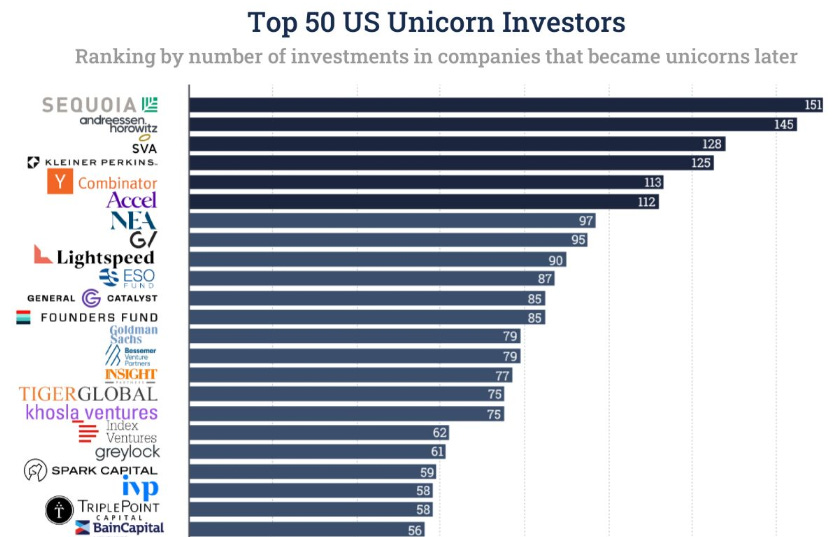
A small handful of VCs are seeing the majority of the returns in the AI boom to the detriment of mid-sized VCs. Generative AI is narrowing the power and concentration base of Silicon Valley that was already previously highly concentrated.
AI is creating fewer winners in VC, BigTech and the Future
GenZ is waking up to the danger of BigTech in 2026
With American elites rushing to implement AI, it’s hurting the prospects of many young people and their career ladder planning and future prospects. This is translating into plummeting AI sentiment among younger Americans as a cohorts. Only 18% of young people ages 14 to 29 say they feel hopeful about AI, according to a recent Gallup survey. Billionaires and their AI “talking-points” aren’t being fully respected either.
Ex-Google CEO Eric Schmidt recently experienced this first-hand as shared by 404 Media: Loud Boos for AI glorification speeches:
See the Hacker News comments around this. It’s not clear to me how Billionaires and an elite class are going to negotiate with a generation they are trying to disrupt for profit?
Claude for Small Business
With Anthropic having a lot of ARR (revenue surge) momentum in 2026, going after SMBs is super interesting. As you know, Small businesses account for 44% of U.S. GDP and employ nearly half the private-sector workforce, but their adoption of AI has lagged behind larger enterprises. AI adoption is actually lagging Silicon Valley but quite a margin in most sectors.
Check out the Small biz skills in Cowork here.
Want to learn more as an SMB owner, take the course.
Anthropic argues that running Claude Cowork plugins with integrations is the best way for SMBs to integrate AI:
For instance, running through Claude Cowork, each connected tool handles a specific job:
PayPal powers settlements, invoicing, disputes, and refunds inside Claude.
Intuit QuickBooks handles payroll planning, the monthly close, and cash-flow, along with tools to help businesses prepare for tax season, and reconciliation work that touches every other system.
HubSpot runs lead triage, customer pulse, and campaign attribution.
Canva generates content for every channel, with the ability to collaborate and edit with your team, publish assets, and track performance.
Docusign sends contracts out for signature, tracks status, and files the executed copy back where it belongs.
Overtime you have to assume Claude for Small Business will get more sophisticated and personalized to each business, industry and their specific needs. Palantir has an established playbook of how AI products can scale to companies in different industries and Anthropic is getting good at sales quickly. With SMBs, there could be an incredible volume of global interest in the months leading up to the IPO. Effectively Anthropic can continue to tweak Claude cowork plugins for specific use cases.
BigAI’s B2B Monopoly of Enterprise AI might have a dark side
There’s in my mind a significant concentration risk that we are already seeing occurring with BigAI. The Information pointed this out recently: (I’ve mentioned this many times before, but it’s worth saying again:)
This is bad for society an the diffusion of AI’s ROI since only a few big winners are emerging in 2026. This is why I call this group of Generative AI first-wave startups “BigAI” in the first place, because they also out-compete incumbents (some of BigTech). In a nutshell:
Anthropic and OpenAI now capture 89% of AI startup revenues
A group of 34 leading AI startups is generating nearly $80 billion in annualized revenue - up 112% in six months.
But Anthropic and OpenAI are pulling away from everyone else. Of course this is only normal considering they have gotten duopolistic funding too.
This concentration of corporate power in Generative AI is accelerating too - the two model leaders now claim 89% of that total, up 4.5 percentage points from six months earlier. - Source.
Anthropic is cornering the Enterprise AI market and its success could mean a huge B2B Concentration of power in just a few companies. Many winners to some extent but few major big winners. This is already being illustrated in the BigAI duopoly of Anthropic and OpenAI, hence the historic IPOs and significant BigTech ownership in these companies with predatory circular financing schemes also making them impossible to compete with.
Anthropic is showing signs that its revenue will create significant tensions on who the beneficiaries are of this AI boom.
The stock market of 2026 is so manipulated, even the President has been gaming it like a casino. Donald Trump's latest financial disclosure has opened an unusually detailed window into the scale and pace of trading activity tied to the US president's investment portfolio.
For some reason in the U.S., US presidents (POTUS) are not banned from trading financial markets but must disclose personal trades. Given Trump’s history of valuing transactional relationships, the AI boom does resemble large-scale ponzi-scheme type dynamics.
What Kind of a World are we Building?
For consumer economies, getting people addicted to digital worlds, apps, smart phones, AI, and gamified scrolling (detrimental to other aspects of their lives) has real world consequences for the future. Like if you cared about demographics and what fertility rates mean to the future of consumption. The U.S. is a consumer economy after all. The American internet and its powers are reshaping human behavior at a primal level that will have devastating effects on civilization and the future. This isn't just about well-being and mental health.
Total Fertility Rates Moving Lower Coincide with Smartphones and Apps Taking Off
There are some signs that the impact of Generative AI will worsen this digital impact on well-being, health, social behavior, optimism about the future, career ladders and freedom from surveillance.
The Finance Sector will face AI Automation 🧮
The sector that I have been watching closely in mid 2026 regarding AI’s ipmat is the banking and financials services sector. I believe the Finance industry could shed considerable jobs with increased layoffs in the 2027 to 2035 period. Again we have Billionaires and their plans, stating as much now:
Ken Griffin went home on a Friday "fairly depressed" after watching AI agents at Citadel do work that used to take teams of PhDs in finance months to complete. Done in days
"These are not mid-tier white collar jobs. These are extraordinarily high skilled jobs being automated by agentic AI." - Ken Griffin - Citadel
Remember outside of Tech jobs, Finance has been one of the industries that has attracted the smartest U.S. college graduates for generations. These are the prospects of our brightest people we are talking about.
Listen to Ken Griffin
The Finance CEOs describe this as a “step-change function” of AI agents to improve productivity is starting to occur in the highest functions of Finance workers from late 2025 to early 2027. (i.e. Claude Models). Many executives like Ken are noting how this is going to reshape the future of the Finance sector. Historically in the broader sense 2026 is likely the year this really began.
This short clip is worth watching (namely because Ken was previously a skeptic of the tech’s impact). 1 min, 32 seconds:
Roughly 6 Percent of Americans work in Finance 💰
As of 2026, approximately 6.6 million to 6.9 million Americans work directly in the banking, finance, and insurance sectors. It’s a pretty big industry of employment and also for white-collar high paying jobs.
So if you use the broader definition tracked by the U.S. Bureau of Labor Statistics (BLS), which adds Real Estate, Rental, and Leasing to the core finance and insurance sectors, the total headcount rises to roughly 9.2 million workers. That’s 5.8% percent of all American workers.
GenZ knows that Tech and Finance job prospects may never be the same, and so does the Alpha cohort who are about to hit their college years. For new graduates these have always been some of the most desirable high-paying jobs. So put yourself in their shoes, for them the AI boom isn’t some wonderful thing bringing AI slop to their beloved internet they grew up on, it’s a great destroyer. America doesn’t seem to even be having a serious conversation about this.
Prices of U.S. Electricity are Skyrocketing ⚡
Those AI Datacenters and the aggressive buildout is also impacting how much Americans pay for power.
Electricity prices jumped +6.1% YoY in April, the highest reading since January. This marks the 8th monthly increase above +5.0% over the last 10 months.
Declines in sentiment towards AI are coinciding with communities outraged by AI datacenters plans near them with increasingly worrisome reports. Many U.S. states are having their wishes and petitions bypassed by special interest groups. Some may even lose access to the grid. For example, the Sierra Nevada tourist hub—home to ski resorts, lakeside casinos, and roughly 25 to 28 million annual visitors—is facing an energy crisis with a familiar culprit: the data centers powering the AI boom. It’s getting truly very wacky.
According to this source, at the same time, overall US CPI rose +3.8% YoY, the biggest increase since May 2023. The Iran Energy crisis is starting to increase inflation and likely years of stagflation. Seen another way, this means electricity prices are rising ~61% faster than the broader inflation rate. This will put strain on the U.S. affordability crisis. People do take notice - as obviously this comes as surging power demand from data centers is straining US energy grids, pushing wholesale electricity costs sharply higher.
A Consumer AI Prediction for 2027
According to my estimates, Google Gemini and NotebookLM will have as many global users in 2027 as will OpenAI’s ChatGPT.
According to data shared by SimilarWeb:
NotebookLM in April 2026:
48.65M unique visitors
44.44% new visitor ratio
247.4M total visits
9th consecutive month of total visit growth
Alphabet has more full-stack and vertical ecosystem AI integration than OpenAI will likely ever have. In my estimate OpenAI’s influence and ChatGPT’s growth has likely already peaked in early 2025.
In my view, Gemini + NotebookLM users will overtake ChatGPT users sometime next year in 2027. That’s my prediction, for whatever it’s worth. Currently I’d estimate that NotebookLM has about 17 million MAUs, and Gemini has in the area of 700 million MAUs (monthly active users).
The reason this prediction works out is also because ChatGPT is likely to lose some users to Claude and other competitors in the 2026 and early 2027 period, even as Gemini continues to grow its global footprint.
This as OpenAI seeks to merge ChatGPT and Codex into a single interface. OpenAI co-founder and president Greg Brockman, who has significant financial ties to Sam Altman, has officially taken charge of all product strategy.Both of which are, really bad ideas.

The BigAI IPOs are Approaching 🎢
The scale of the BigAI three, the biggest IPOs in tech history are hard to ignore. Do note that Anthropic’s valuation is closer to $900 Billion now.
The countdown to SpaceX’s IPO is now just weeks away. Meanwhile, Anthropic has agreed the terms of a $30 billion fundraising round that would value the AI startup at $900 billion. This implies Anthropic could be worth more than OpenAI when they go IPO later this year.
Anthropic’s revenue surge in mid 2026 is also breaking norms. Anthropic’s private market valuation has decoupled from historical tech growth models, heavily incentivizing a public listing to institutionalize its capital structure and continue to prop up the AI narrative that this is a great boom. Four firms — Dragoneer, Greenoaks, Sequoia Capital, and Altimeter Capital — will jointly lead the round at a pre-money valuation of $900 billion.
OpenAI could still maneuver to go IPO before Anthropic as seems to be their intention, but their momentum has stalled since Google, Anthropic and China have upped their game. Sam Altman linked Cerebras’s IPO success has Sam Altman pushing forward in OpenAI’s IPO process, even though the AI startups appears mismanaged and disorganized in terms of product and marketshare competitiveness. Even while the CFO of OpenAI has been on the record saying they are not ready for a 2026 IPO.
As for SpaceX, rhe company reportedly filed its IPO paperwork confidentially with the SEC on April 1, 2026. So tomorrow (or today) we are expecting the absolute main event of the pre-IPO process this week: the official public release of SpaceX’s S-1 registration statement. [TBA, I will link it here].
SpaceX is now expected to raise as much as $75 billion in its IPO which could debut as soon as June 12th.
SpaceX (not yet merged with Tesla) is on pace to be 2.5 times larger than Saudi Aramco's IPO, the current largest IPO ever. Money that SpaceX desperately needs.
I’d estimate Capex for Tesla and SpaceX likely is in the area of $40 Bn. in 2026, if not higher. Because TeraFab, xAI now SpaceX AI, and Orbital compute plans doesn’t come cheap. They barely make any money compared to their IPO valuation. Oddly China isn’t sleeping on the idea of orbital compute, China just handed a startup an 8.4 billion dollar credit line to build massive data centers in orbit.
SpaceX AI released a coding product called Grok Build in Beta last week. Grok Build is a terminal-based, autonomous AI coding agent and Command-Line Interface (CLI). xAI has been merged into SpaceX. There’s been a noticeable spike in churn of talent since the internal re-org. Grok did not make great headway in the B2C market and appears to have also pivoted to the Enterprise AI route at roughly the same time as China and OpenAI have. It’s not even clear what SpaceX will have to do with AI at the time of its IPO. Maybe being a glorified Neo Cloud is a way to slow down the cash burn. Doing a compute deal with Anthropic is like admitting xAI has lost. Elon Musk’s interest and ability to impact the future of AI appears to be diminishing. It’s likely SpaceX will end up being more of an Energy and AI Infra company. I expect Tesla to merge with it in 2027 or 2028. Tesla does not also appear to be a sure-fire winner in humanoid robotics either than what it appeared like even a couple of years ago.
Orbital compute could end up being another race with China. I have a high degree of confidence on China’s ability to do anything infrastructure related ahead of most other countries. I expect China to build a lunar base faster than the U.S. is capable of doing and that means being first-movers in the lunar and space-economy. This also means China’s energy advantage is likely to grow considerably in the 21st century. Peter Thiel rushing to invest in Panthalassa is a sign of the times. Americans are highly constrained by compute, memory chips, rare earth metals and just plain bad geopolitics and Silicon Valley’s heightened lobbying (and insider influence) over Washington.
Time to $30 Billion Revenue - Case Study
We sometimes forget how young of a company Anthropic is. I noticed it has the highest concentration of AI researcher talent in history about in 2024. But two years later, it’s almost unrecognizable.
It took Salesforce 20 years to reach $30 Billion ARR.
It took Netflix 24 years.
It took Uber 13 years.
It took Amazon 15 years.
It took Anthropic, just 3 years.
It means Anthropic may have added revenue faster than almost any software company in modern history. Because Google and Amazon have such big stakes in Anthropic, it means ASICs and competitors to Azure are guaranteed a lot of revenue. This is a limited ROI of Generative AI, mostly just for Silicon Valley’s top companies. The circular financing mechanisms of Anthropic’s rise make Google Cloud, TPUs, Tranium chips and AWS huge beneficiaries. Even as Anthropic piggybacks on the success of Cursor. The top VCs and BigTech companies are so intertwined now it’s like a different version of monopoly capitalism is set to manifest post 2026.
Just three years after the pivotal Google Research paper in 2017, in late 2020, Dario and Daniela Amodei resigned from OpenAI. They didn't leave alone. A tight-knit group of about 9 to 11 top-tier OpenAI researchers joined them in an exodus where Anthropic was founded in 2021. This company is only five years old.
What’s in a Frontier Model API? 🤔
The BigAI narrative case study of Anthropic is essentially a new business model of Silicon Valley. The centralizing power of this business model will mean the potential for abuse is going to be staggering.
Anthropic scaled from $87 million to $40 billion in annualized revenue run rate in just three years, compressing a growth cycle that took Salesforce 20 years into months, powered by enterprise adoption where AI models integrate directly into corporate workflows and usage compounds over time.
DeepSeek Funding $5 to $6 Bn.
DeepSeek is finally getting funded over in China. What could Deepseek become with 5 billion in funding?
DeepSeek is currently finalizing its first-ever external funding round, and I believe that three to four billion could end up being more like five or six billion. The stakes are too high. So what does DeepSeek have to do with Huawei and China’s AI chip sector and semiconductor industry? More than you think.
The round is reportedly being led by China’s state-backed National Integrated Circuit Industry Investment Fund, with tech giant Tencent also participating as a minority investor.
China’s concentration of AI researcher talent, emphasis on software and hardware efficiency workarounds and 996 (intense) work culture can produce an unusual amount of real innovation in the decade ahead with regards to the future of AI. The days of China’s top AI research labs not being commercially successful are likely over. This as more AI chip, robotics and AI labs have gone public in China in 2025 and 2026.
DeepSeek’s Mysterious Impact on the Future of Tech
DeepSeek’s valuation won’t stay in the $50 Billion area. China's 60-billion-yuan ($8.8 billion) national artificial intelligence fund, founded in January last year, is in talks to be a lead investor in DeepSeek's fundraising. Reported back in April, 2025 China's Ministry of Industry and Information Technology and the Ministry of Finance had jointly established a 60 billion yuan ($8.2 billion) national artificial intelligence fund to fast-track strategic investments in AI infrastructure and cutting-edge technologies. I think DeepSeek is fairly deserving of a significant portion of that. I’m bullish on their flagship unreleased DeepSeek-R2 model. The DeepSeek team have in recent months opted to prioritize internal performance standards, infrastructure optimization, and the rollout of their newest base and reasoning architectures. The funding basically delays their best work from going live until likely into 2027. So we don’t really have a lot of visibility into what they have been up to outside of the papers they share which look extremely promising.
DeepSeek founded by Chinese hedge fund billionaire Liang Wenfeng, who controls nearly 90% of the company, the lab has not previously sought out investors but unleashed an incredible leadership by Chinese AI labs in the open-source or open-weight spectrum for developers building with AI. Liang Wenfeng appears to have his own philosophical lens to how AI should be developed beyond just commercial interests like OpenAI appears to have succumbed to. Since DeepSeek’s early 2025 impact on the ecosystem, China’s trajectory in AI has been fundamentally altered and accelerated Huawei and other Chinese AI chip makers to develop a competition ecosystem vs. Nvidia.
Nvidia Earnings Expectations
Wall Street consensus sits at $79 billion in revenue (Q1 2027) and adjusted earnings per share around $1.81. That would represent an 82% year-over-year revenue growth and 135% earnings growth for a company valued at more than $5 trillion. Read their Financial Reports here. SpaceX is doing a 5-for-1 stock split ot make their IPO more reasonable. Like I’ve mentioned Nvidia is scheduled to report its fiscal Q1 2027 earnings this Wednesday, May 20, 2026, after the US market close.
So for Datacenter revenue itself (which includes their lucrative GPUs) the market is expecting $73.1 billion to $73.3 billion (the core driver, comprising over 90% of total revenue). ASICs and AMD AI chips are primed to meet higher demands for compute that are expected to continue to drive forward along with demand for Nvidia’s GPUs.
Macro Risks of 2026 and Uncertainty
While the Iran crisis on the closure of the Strait of Hormuz is going to increase inflation, there’s some bond instability occurring in May, 2026. The mid-May U.S. Consumer Price Index (CPI) report came in significantly hotter than expected, igniting fears that inflation is getting sticky.
The U.S. debt market is also a bit more shaky than usual:
China's total holdings of US Treasury bonds have dropped to $693 billion, back to levels last seen during 2008 crash.
As the US continues to run a $2 trillion annual deficit, the countries that used to buy that debt are selling aggressively. Japanese investors also dumped US bonds at the fastest pace in 4 years. (Source).
China once held over $1.3 trillion in US debt. That number has been cut nearly in half over the last decade.
The most common fear is that without China buying US debt, the US will struggle to fund its deficits, forcing interest rates sky-high. I think those fears are overblown but clearly there’s a lot of geopolitical uncertainty and new kinds of risks and shocks to the system.
Anthropic and OpenAI Marketing is also a Destabilizing Factor
Dario Amodei, CEO of Anthropic, says AI could create a world with 5–10% GDP growth and still leave millions of people out of work.
It’s not easy to listen to Billionaire CEOs and to figure out if they are just exaggerating the impact of their products or if it’s something else. Dario has made wide-ranging claims about the end of Software Engineers that haven’t come true or been very accurate.
“Growth no longer guarantees jobs.”
This fear-mongering approach of AI executives is worrisome because it generates more AI anxiety for those most vulnerable. It’s also not behavior or opinions you want to be hearing from the dignified folk at Anthropic, who are supposed to be trying to maintain a trustworthy reputation. As Anthropic’s financial leverage on the AI ecosystem is full revealed, we’ll see the true colors more and more of the Co-founder Billionaires who work there.
The GDP gain AI have created have been mostly tied to datacenter construction, and haven’t really trickled down to Americans who have record low consumer sentiment and plummeting trust in AI. The corporate productivity promised by AI has been thus far slow to manifest and when it does, in very specific verticals of companies and small pockets of the world. So these BigAI IPOs of this year are symbolic in more ways than one.
It’s alarming to see Arizona turn into a Semiconductor state and Texas turn into a Datacenter state almost overnight. Washington doesn’t appear to have the same independence from Silicon Valley it once did in the Trump Administration and it creates less trust in American institutions and global rule of law. When Anthropic is being used inside of the Department of War and the Ukraine is using robots instead of infantry, the genii is out of the bottle and it may not usher in the world we had been promised.
These are some of the things I’ve been thinking about this week. Don’t forget to tune into Google I/O here. The event takes place on May 19 and 20, which starts at 1PM ET on Tuesday. This is the YouTube to the Keynote. Everything around the SpaceX IPO is going to be quite fascinating.
Thanks for reading!


Ilya Sutskever testified Sam Altman constantly lied and pitted executives against each other. Altman testified Musk demanded 90% control. The OpenAI trial is revealing ugly internal politics on both sides.
The real AI backlash is not anti-technology.
It is a legitimacy crisis.
A small cluster of firms captures the upside, models, compute, IPO wealth, enterprise workflows, defense contracts while the public absorbs the downside: job insecurity, higher power costs, local data-center burden, surveillance, and institutional dependence.
That bargain will not hold.