


Audio Version: 26 min. Listen on the go.
Good Morning,
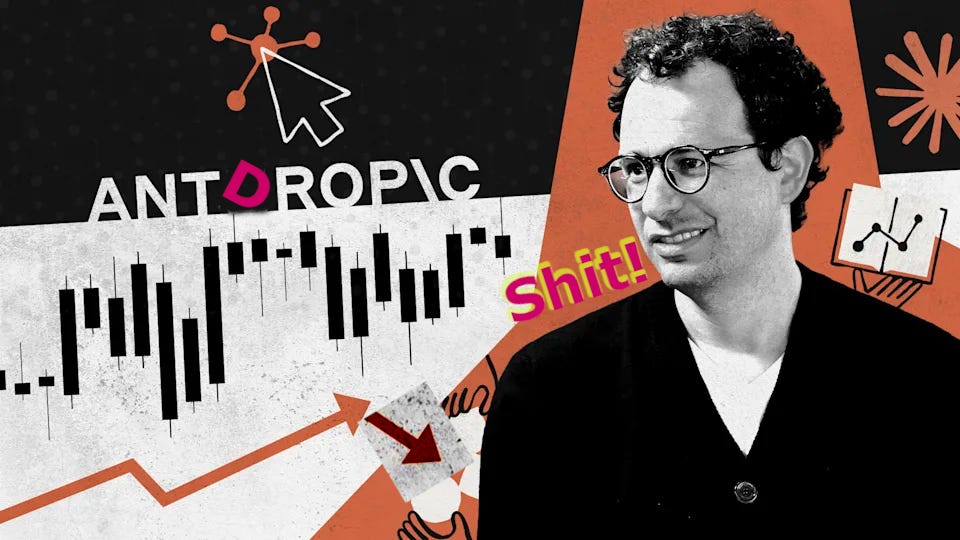
Anthropic’s stock price is now below its IPO price ($83 vs. $81.90 today and falling after hours). It’s an awkward time in the AI cycle and increasingly Anthropic appears to be at the center of it. This comic by Paul Noth in the New Yorker really captures the irony of the times.
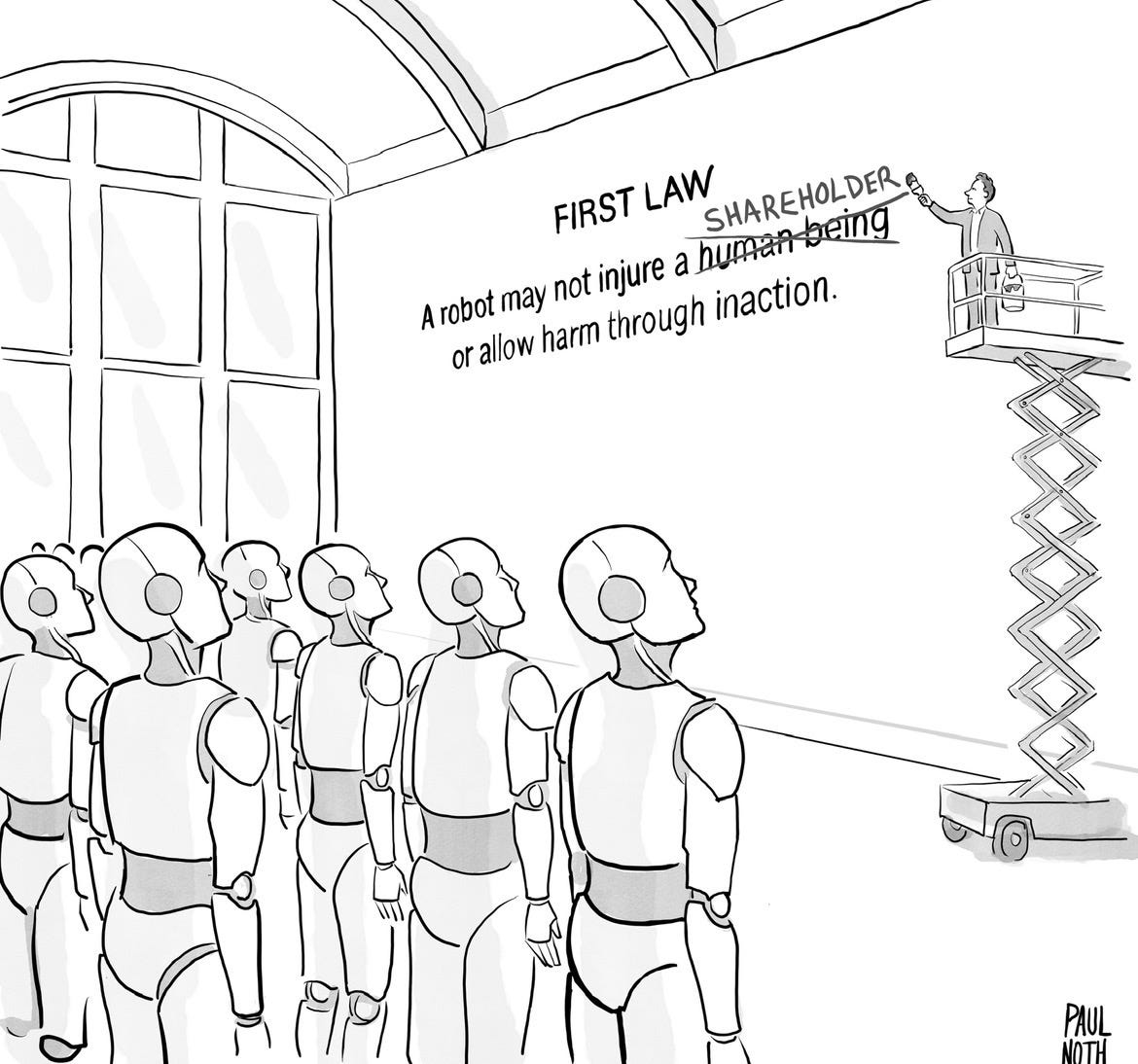
As you know, Anthropic was founded in 2021 by former OpenAI employees specifically to prioritize AI safety, alignment, and interpretability. Now nobody talks about what if they fail on their central mission?
After being determined to be the heirs apparent of the AI moniker, with fully weaponized buzzy marketing acronyms like AGI or RSI, and the absolute frontier of AI labs, Anthropic and OpenAI have to actually prove they are good at making real products that people and organizations actually want to use. In many respects, that remains to be seen. So much of how Anthropic views the future of AI seems starkly at odds with making products people need and Enterprise companies use that delivers ROI.
We’ve Entered AI’s Awkward Phase Late 2026
Fast forward nearly six years from their founding and we have a few problems: firstly, Anthropic and OpenAI are facing an increasingly urgent problem supposedly where internal, unreleased models are becoming so powerful that many of their own employees no longer believe they can be safely released, according to Axios’ sources of more than two dozen people familiar with the internal debates.
Now going IPO, the commercial pressure and the supposed internal AI saftey indoctrination of Anthropic, are about to create a lot of pressure and contradictions. All of this is not going to be popular with ordinary Americans and global citizens. It’s already getting chaotic - and why is all of a sudden seemingly everything breaking down?
The same supposedly useful AI is disrupting saftey creating a real-world structural crisis in cybersecurity where Generative AI is uncovering software vulnerabilities at machine speed. In a world where the ROI of Generative AI is in doubt, it’s also embarrassing. AI is being disruptive, but not in the positive market sense.
A Vulnerability Apocalypse is giving AI a Bad Rep
Secondly, at the same time, the internet is having a Cybersecurity vulnerability apocalypse (for lack of a better term, I’ve seen Vulnpocalypse or Patchpocalypse) due to these models and their actual lack of proper alignment. Microsoft recently has declared a code red in the middle of a ‘Patchpocalypse’. It’s already getting enough doomsday AI for me. But the drama has just begun.
There’s also this little issue of self-replicating AI. What? It really is the stuff of comics and doomsday Netflix documentaries.
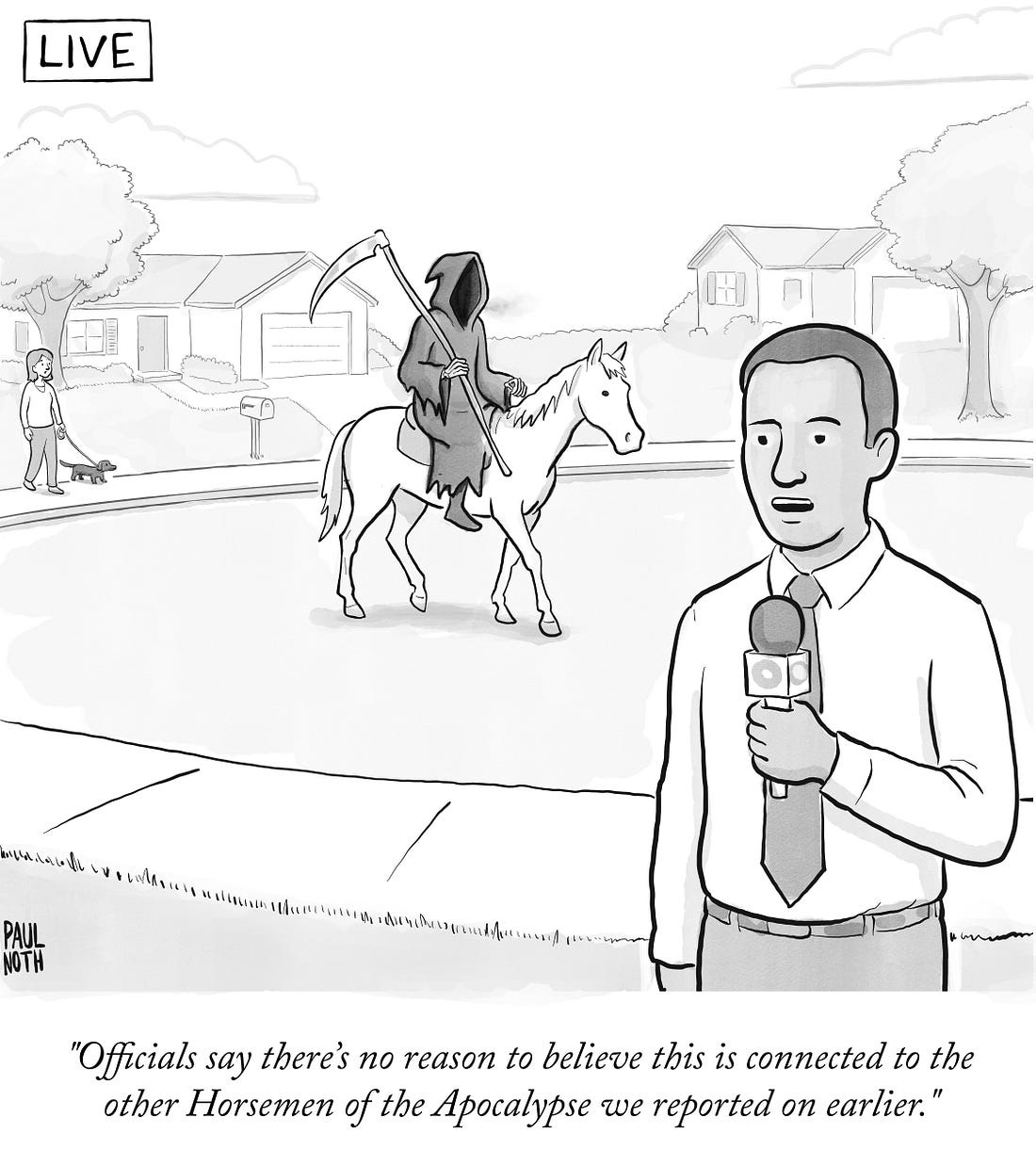
“We’re not under attack. Things are just breaking”
Now I just wish Anthropic, OpenAI, Google and others would just focus in 2027 on making great products and applications. In 2027 in a few months we’ll also find out if so-called AI devices are legitimately worth owning for consumers.
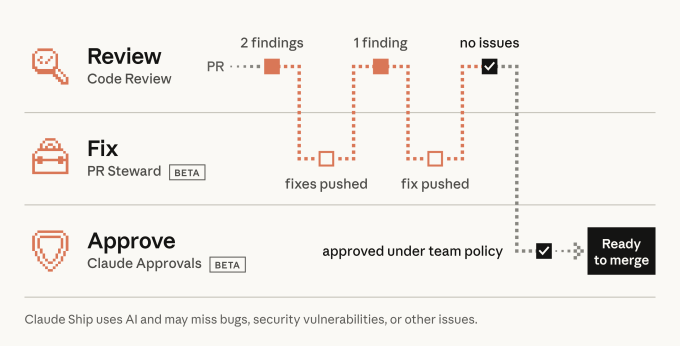
At a time when AI coding startups like Cognition are currently in talks to raise (another) $2 billion or more at a $75 billion valuation Anthropic is moving from having Claude write code to helping developers decide when that code is ready to ship. It’s called Claude Ship.
This isn’t RSI, but it’s certainly a step in the right direction to shipping better AI coded products. Claude Ship basically automates and speeds up the post-coding lifecycle on GitHub—specifically reviewing pull requests (PRs), pushing code fixes, and autonomously approving low-risk changes based on team-defined policies.
I expect in 2027 that the intersection of software engineering, product and AI to make significant headway. If Researchers haven't found technical solutions for controlling the most advanced models and they are now under immense commercial pressure to build disruptive products, how will Anthropic cope? It needs to make great products that continues to make Generative AI a must-have for companies of all sizes with models that are actually safe. Anthropic is taunting and flaunting the frontier and it’s not winning many fans with this approach.
Recently an Anthropic mathematician (Levent Alpöge) used an unreleased "research" version of Claude to present a proof of the Riemann hypothesis, which had eluded the brightest human minds for more than 150 years.
I just wish all of the capital being thrown at these companies was leading to great products without the threats and warnings of existential risk, and in such a scenario, perhaps the stock would do better and gain more confidence of investors. If Anthropic keeps making the best models, Claude is going to keep evolving fast.
I asked Jenny Ouyang of Build to Launch to help us discover some new ways of viewing Claude’s progress and new ways to use it.
Build to Launch
Jenny is a Software Engineer with a knack for teasing out the Practical AI building aspects.

(Links are in green, to click on)
Make the Most of Claude Code: 15 Projects From Your First Prompt to an AI System That Runs Itself.
Obsidian + Claude Code: How to Build a Second Brain that Remembers, Connects, and Runs Itself
SEO for AI: How to Make Your Product Discoverable by LLMs
The article includes prompts for readers to copy. They will be in quote boxes.
I asked Jenny to give us an update on new features or updates around Claude that some of my readers might be interested in, like a field guide. She goes into quite a lot of depth.
Claude 2.0: The Feature Changes That Overturn How You Work
By Jenny Ouyang, Subscribe.
Which updates in the new Claude app to use now and which to wait for, with a prompt to try each one today.
This year, Claude features have been knocking whole industries off balance. And that is only one of the directions Claude moved in 2026:
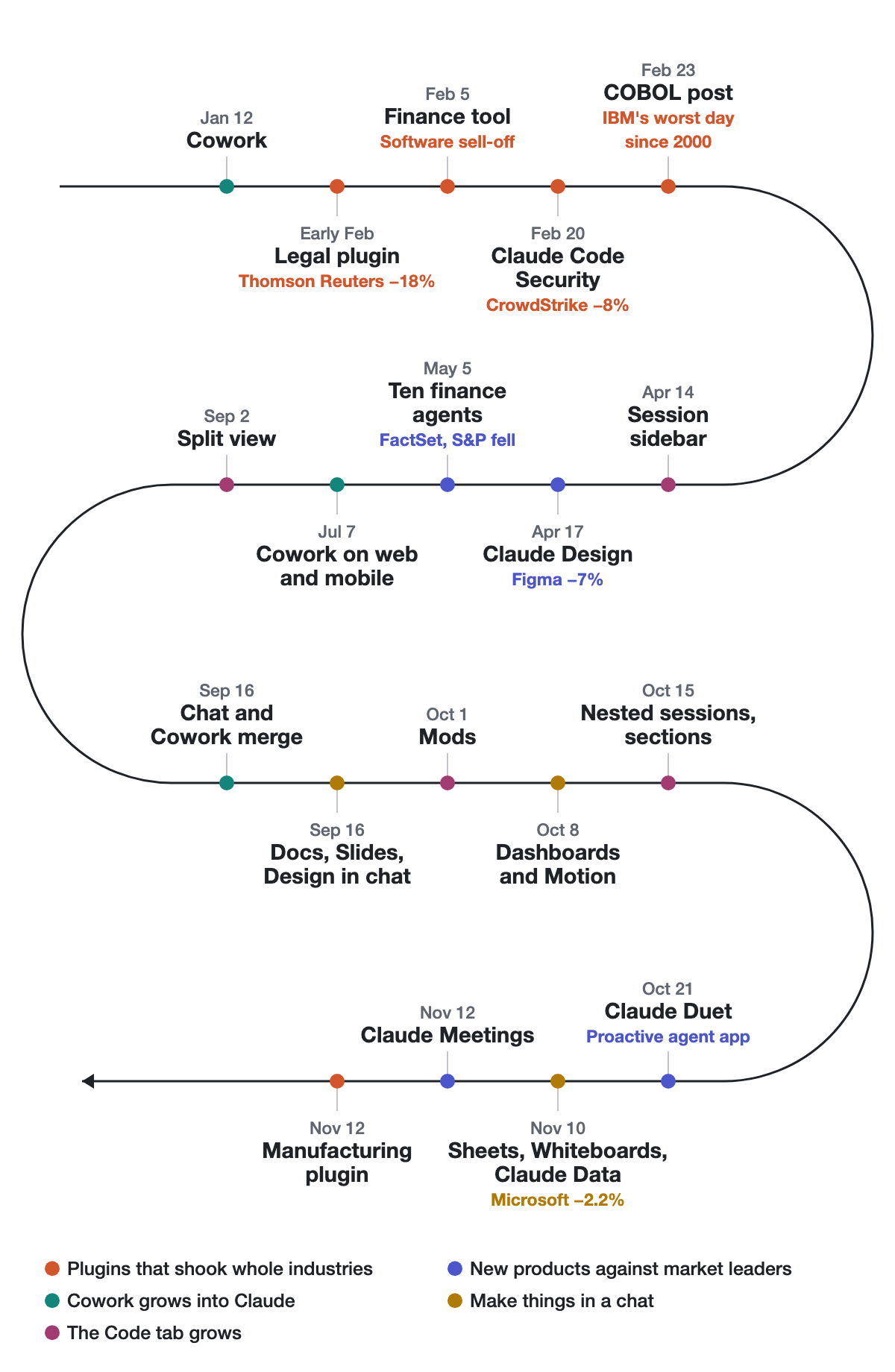
Claude in 2026: plugins that shook whole industries, new products against market leaders, Cowork growing into Claude, new things to make in a chat, and a Code tab that keeps growing.
Sources: legal plugin, finance tool, Claude Code Security, COBOL post, session sidebar, Claude Design, finance agents, Cowork, web and mobile, split view, nested sessions and sections, chat and Cowork merge, mods, dashboards and Motion, Claude Duet, Sheets, Whiteboards and Claude Data, Microsoft -2.2%, Claude Meetings, Claude for Manufacturing.
Behind those headlines, a new feature lands in the app every few days, faster than anyone keeps up with. So which ones deserve your attention now? And which ones are worth the wait?
I’ve used Claude since early 2024, so I watched most of these changes land. I went through every slow and clunky experience, and witnessed the exciting breakthrough moments. Those moments changed how I work: I started as an engineer, and now I manage AI teammates. At my job, I got every C-suite leader using Claude, connected our company database to it, and onboarded everyone I could.
If you’re a knowledge professional, there has never been a better time to go deep with Claude, keep up with its pace, and level yourself up. So for this guide, I picked the six changes that matter most for your work. For each one, you’ll see how to use it and get a prompt or the steps to try it yourself.
What’s inside:
The Code tab: what it is, and why it is for you too
Sessions and sections in the sidebar: many jobs at once, and one session that runs the others
Split view: two sessions side by side
Claude Design: your brand in every design
Dashboards: numbers that keep themselves current
Mods: make the app your own, and the trust question
The one limit: when not to use the Claude app.
