

Good Morning,
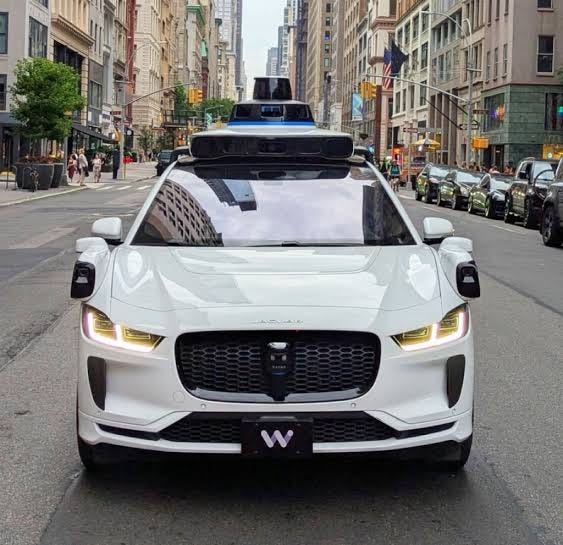
I hope you have enjoyed your summer. I like to think about large macro trends in the AI space to give you a better idea about how fast things are moving and in what direction. Autonomous vehicles at scale on our roads came late, about a decade late but there are some promising signs that the robotaxi dream is about to accelerate in a meaningful way. It’s being led by Alphabet spin-out Waymo.
It’s getting Tesla and Uber really nervous. The Uber layoffs of over 3,000 employees this week means it needs to pivot back harder into its Robotaxi to face the coming storm. The key signal occurred earlier this year in February when Waymo raised an astounding $16 Billion.
Now in September things are moving fast, Waymo plans to accelerate robotaxi expansion with launches in Denver, San Diego, and Tampa. I have enough data to predict that 2027 and the late 2020s broadly speaking will be an “inflection point” for Robotaxi scaling. This isn’t just occurring with Waymo but the entire ecosystem with several U.S. and Chinese players. It’s happening globally and at scale.
This week according to Bloomberg we have learned that Alphabet's Waymo is in the final stages of talks to raise debt for the first time, seeking more than $3 billion from lenders including Pacific Investment Management and Blackstone. This is the kind of capital, maturity and execution that cannot be beaten by the likes of Uber, Tesla or other Robotaxi competitors. This means Waymo raised nearly $20 Billion in 2026 alone, and it’s not even done yet.
At a time when robotics is being hyped but lacks real world demand, the space economy is being built by a NASA with big promises, and U.S. datacenters and manufacturing is being pushed (even on other parts of the world and with trade tariff diplomacy) - the advent of the American robotaxi is being a little, overshadowed. But it’s actually a big deal.
