


If 2025 was the first year of AI agents, how to build them? What should you know before you start? I asked Hodman Murad for an in-depth guide on Agent protocols. To check out our other recent guides go here.
A fellow Canadian🍁🇨🇦, she’s now also a Founder: she writes the Data Letter.
video:
THE DATA LETTER

Read her introduction to the brand new company she’s build, Asaura AI (Beta launch April, 2026).
Background and Startup Story
Hodman Murad is the founder of Asaura AI, where she pioneers AI designed for executive function. As the author of The Data Letter, she identifies common failures in AI and data systems, such as hallucinated growth metrics and the costly loss of customers due to optimization.
Beyond her technical expertise, she writes Asaura, a publication dedicated to exploring ways AI can be improved to enhance human productivity and mental health. She’s going to be building in public so you can follow along. Her work focuses on connecting high-performance systems with their users.
This article is essentially a mini-book, 8,000 words and 61k characters. As a data scientist and consultant with so much B2B experience, I think she’s a great person to outline some of how AI agents work and for you to learn a bit more about the new protocols. This article might be a bit more technical than most of our pieces, but is meant for actual learning and a deep introduction. That being said, we’ve made it as easy to read as possible.
Her new startup called Asaura AI, is specifically designed for adults with executive dysfunction, people who know what to do and have time, but can't make themselves start. Since the pandemic and with the affordability crisis, and with more people identifying being on a spectrum of various cognitive divergences (ASD, or other), the concept of her product is relevant to a lot of folk. (Building in public notice): She’ll be sharing everything: the research, user interviews, design decisions, technical challenges, and the actual build process.
Asaura AI’s newsletter is primarily about AI at the intersection of productivity and mental health.
More from Data Letter Newsletter 📊
How Netflix Does Data Reliability
Who Owns Data Quality, Anyway?
How to Detect Model Drift When You Can’t Measure Performance
Bad Data’s Hidden Toll
Do writers become Builders?
As more Newsletter writers and creators are becoming startup and product founders, knowing more about how AI agents work might be helpful.
2025 was all about the protocols and required scaffolding getting in place and maturing that enables everything about what comes next from Generative AI perhaps finally delivering some societal and broad based macro ROI.
Hodman’s crystal clear writing style was the right fit to introduce this crucial and complicated topic for AI’s emergence in the decade ahead. Hopefully 2026 will not just help democratize knowledge (as displayed in reasoning models in 2025), but democratize opportunity. A new breed of entrepreneur is being born with AI’s coding capabilities now available in natural language.
In a Nutshell
This is the tl;dr of AI Agent protocols as of January, 2026.
Integration & Data
Model Context Protocol (MCP): Standardizes how agents connect to local or remote data sources (e.g., Google Drive, Slack).
OpenAI Function Calling: Standardizes the JSON format for agents to trigger external software tools.
agents.json: A discovery file that tells agents which capabilities an API or website offers.
Collaboration & Handoff
Agent-to-Agent (A2A): Allows agents from different vendors (Google, Microsoft, etc.) to talk and share tasks.
Agent Communication Protocol (ACP): Manages the “memory” and state of long-running agent tasks.
OASF (Open Agentic Schema): Defines an agent’s “resume” (skills and costs) so other agents can find and hire them.
API & Commerce
Agent Protocol: A universal API (e.g.,
POST /task) so developers can swap agent frameworks without changing code.AP2 (Agent Payments): Enables agents to pay each other autonomously for services using digital wallets.
Why read this?
Understanding AI agent protocols is critical because they are the "connective tissue" of the 2026 AI economy. Just as TCP/IP turned isolated computers into the Internet, these protocols turn isolated bots into a collaborative ecosystem. If you are hoping to work with AI agents, orchestration and build stuff, these are basic requirements.
Share this post if you think you know a colleague, coworker, founder, friend or entrepreneur / AI enthusiasts who might benefit from it.
The Agent Protocol Handbook
December, 2025, last updated January, 2026.
Full title: The Agent Protocol Handbook: Navigating the New Era of Agentic AI Standards.
Protocol Convergence
The evolution of AI from conversational chatbots to action-oriented agents demands a new infrastructure layer, which the industry has now standardized around a layered stack of open protocols. This is about building the economic infrastructure for a future of autonomous digital entities.
MCP and AP2 form the protocol layer between AI models and the external world.
We’re witnessing the early stages of a fundamental architectural shift in artificial intelligence. The conversation has moved beyond model capabilities to infrastructure design, specifically, how AI systems reliably and securely interact with the external world.
While most attention focuses on model capabilities, a lack of execution infrastructure currently blocks agentic AI’s progress. How do autonomous systems safely access tools, manipulate data, and conduct transactions at scale?
This represents both technical standardization and strategic positioning. The December formation of the Agentic AI Foundation (AAIF) has formalized this standardization, shaping ecosystem development much like TCP/IP defined internet communication or HTTP enabled the web.
In this analysis, we examine MCP (an AAIF founding project) and AP2 (the industry-standard payment layer) as foundational protocols within the emerging agentic ecosystem, exploring their architectural roles and strategic implications for the autonomous agent economy.
🏗️ Chapter 1: Building Agentic AI’s Missing Infrastructure
The transition from chatbots to autonomous agents represents the most significant architectural challenge since the advent of cloud computing. Despite their proficiency in conversation, current AI systems are constrained when it comes to executing tasks in the real world.
Execution as Bottleneck
The bottleneck for agentic AI is its execution infrastructure. Current AI systems can generate detailed instructions for complex tasks, such as booking international travel, outlining investment strategies, or explaining supply chain optimization; however, they cannot execute these tasks autonomously.
Consider the gap:
AI models can describe processes in detail
They can analyze options and make recommendations
They can generate step-by-step plans
But they cannot:
Access the tools needed to execute those plans
Conduct transactions across multiple systems
Maintain security and auditability while acting autonomously
The limitation is the lack of a standardized, secure, and scalable infrastructure for action.
Protocol Layer Opportunity
Historically, technological revolutions follow a predictable pattern: breakthrough invention → protocol standardization → ecosystem explosion. We saw this with:
Internet TCP/IP-enabled global networking
Web: HTTP/HTML created the browsing experience
Cloud: REST APIs standardized service integration
Mobile: App stores created distribution ecosystems
Agentic AI reached its standardization milestone in December with the launch of the AAIF. In this new landscape, value capture has shifted from controlling the protocol itself to building specialized agent skills, such as Block’s goose framework, and the proprietary orchestrators that run on top of these shared standards.
Two Complementary Standards
The protocol landscape has crystallized into a layered stack:
Model Context Protocol (MCP): The AAIF Standard for Context
Open standard for tool and data access
Client-server architecture with local/remote flexibility
Developer-friendly with a growing open-source ecosystem
Strategic bet: commoditize integrations, compete on model quality
Agent Payments Protocol (AP2): The Emerging Standard for Secure Transactions
Focused on secure payments and transactions
Built on the existing Google ecosystem and partnerships
Enterprise-grade security and compliance focus
Strategic bet: leverage existing enterprise relationships and payment infrastructure
These specifications, whether stewarded by the AAIF (like MCP) or backed by broad industry coalitions (such as AP2), serve as the neutral technical baseline for the entire industry.
Why Infrastructure Matters Now
Three converging trends make protocol standardization urgent:
Enterprise Demand: Companies need agentic AI that works with existing systems without security compromises
Regulatory Scrutiny: Autonomous systems require audit trails and accountability mechanisms
Economic Scale: The agent economy needs standardized transaction protocols to achieve network effects
Strategic Stakes in Protocol Wars
For AI companies, the protocol layer represents both defense and offense:
Defensive: Prevent being locked into competitors’ ecosystems
Offensive: Create ecosystems that generate network effects and switching costs
For enterprises, the choice is about future-proofing AI investments while maintaining security and control.
For developers, it’s about building on infrastructure that platform changes won’t obsolete.
What’s at Stake
The adoption of these standards will determine:
Who captures value in the agent economy
Which companies become ecosystem gatekeepers
How much interoperability exists between AI systems
What security and privacy standards become normative
Whether we get open ecosystems or walled gardens
This analysis examines MCP and AP2 as the foundational layers (context and commerce) that enable a cross-platform agent economy.
Let’s examine MCP’s architecture and analyze the technical and strategic implications of Anthropic’s open protocol approach.
🔌Chapter 2: MCP: Protocol Layer for Agentic AI
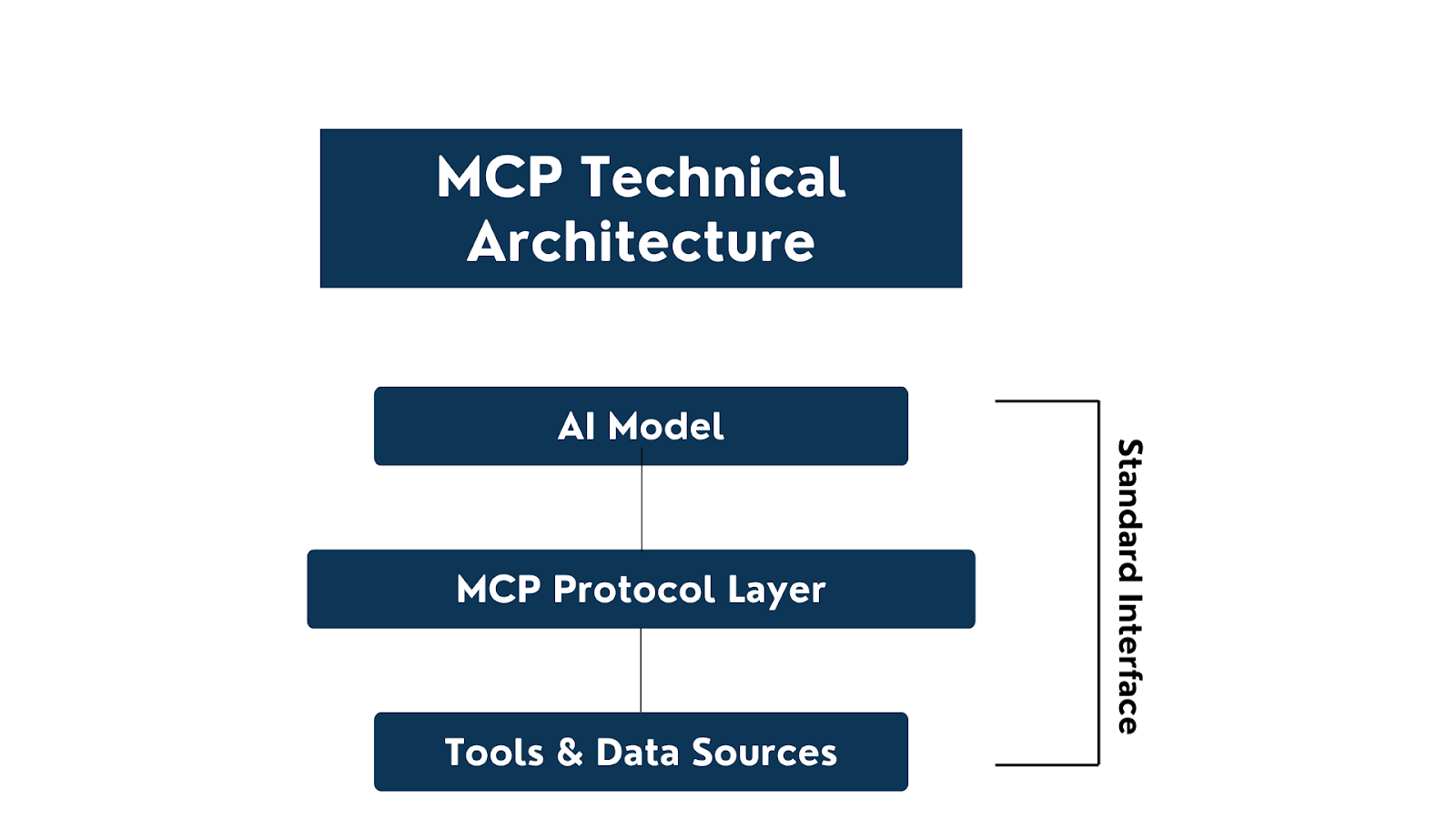
MCP sits between AI models and external resources, creating a standardized protocol layer.
