We’re still thinking about some of the most impactful trends in AI in 2025 and moving forward in 2026 and beyond. Kenn So writes an annual AI trends report that this year got really in-depth and longer than ever.

I asked him for a summarized version for the thousands of AI enthusiasts, executives, founders, tinkerers, analysts, builders and curious minds who read this Newsletter. When I share a free Newsletter it goes out to everyone and for five days remains outside of the paywall.
It’s been four years since I started AI Supremacy as my full-time job as a blogger and curator. I can’t continue without your active support, and to fuel the traffic I send and my ability to invite incredible guest contributors that I bring to you each week.
The Newsletter is read by people in 211 countries and by nearly 200k AI enthusiasts, including another 50k followers on Notes (where I share my insights and AI news updates and snippets frequently). Over the past year, we’ve gained 72% more readers to the publication.
Kenn So writes Generational.

Deeply researched analysis of the business and technology of AI.

If this report was valuable to you, consider supporting the contributing author.
Why read the full deep-dive? 100+ pages covering everything from the macro picture down to scaling laws, with proprietary analysis throughout. There’s also a market map of over 1,800 AI startups, highlighting the top 10% that matter most.
Multimedia and PDF versions of the report: link
AI agent market map: link or head to the bottom of the article
I’m committed to supporting emerging writers and trying to distribute their hard work to a wider audience. If you think that’s a worthy endeavor, share my articles and restack the ones you think are especially good on Notes, it helps not only me but the deep thinkers I want to support.
I’m aware that many of my readers on Email are not active on the Substack app. For voracious readers I recommend the website to browse will you are doing other work. Categories like Technology, Finance and Politics remain a great way to keep tabs on the world of innovation and the U.S. led backdrop of the capital allocation and to explore future opportunities.
Substack’s web reading experience has been improved.

We live in Generational Times in High Tech 🌊
Works by Kenn So
How The AI Bubble Will Burst
Essay: Agents at Work
How to manage a team of AI agents
By mid-2025, 55% of US adults had used a generative AI product. That’s a faster adoption curve than the internet or the smartphone.
Discover Kenn’s fourth edition of his AI Trends report that he’s been writing since 2022 (before ChatGPT launched).
How will AI continues to impact the labor market?
Employment for workers ages 22-25 in highly exposed roles (software development, customer service) has fallen sharply.
How will AI continue to consolidate in the marketplace?
AI exit activity increased 44% from 2023 to 2025, but the biggest value is going to Big Tech acquirers, not new public companies. Acquisitions Are the Exit Path, Not IPOs. - Kenn So
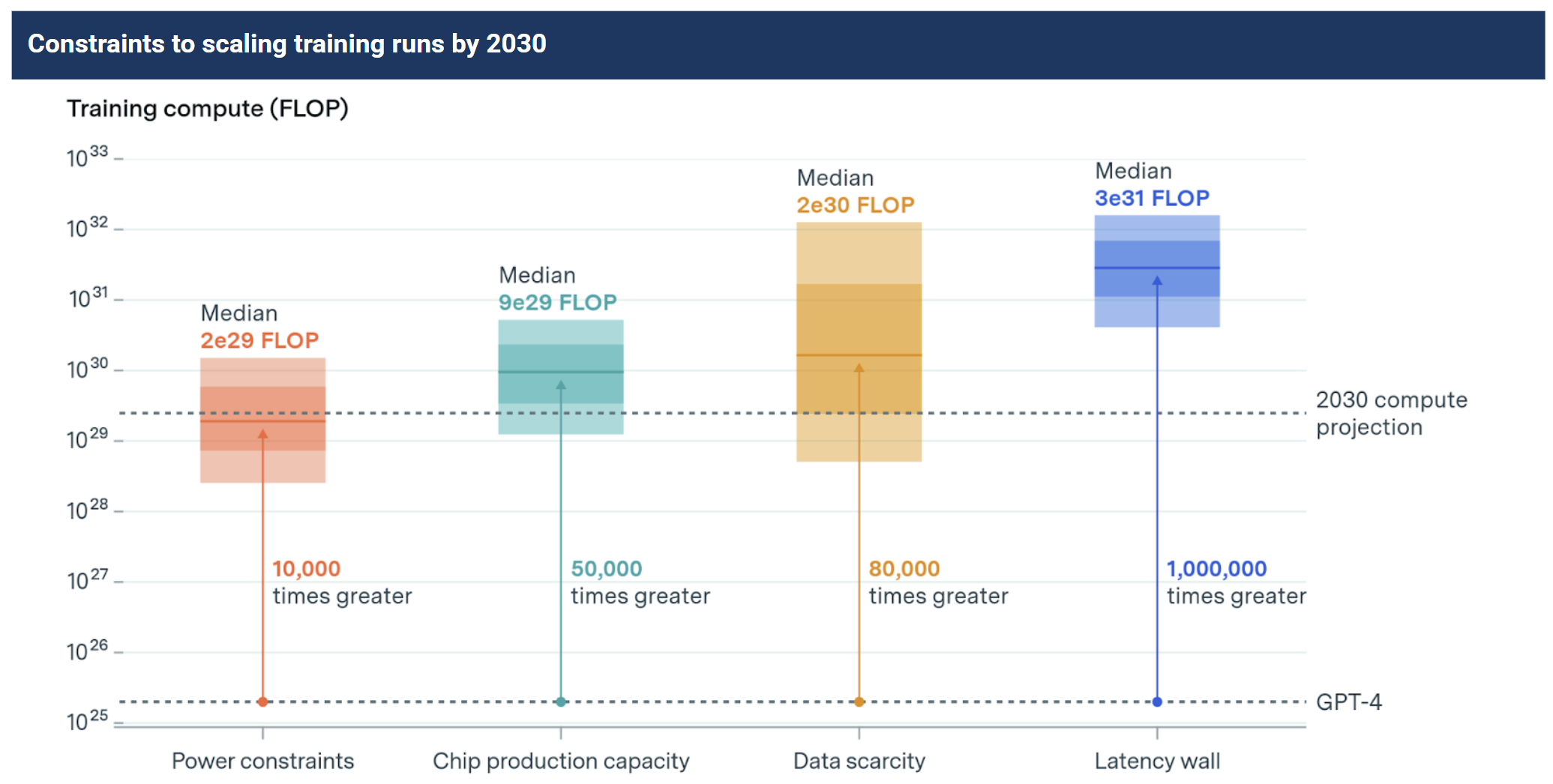
How will the U.S. solve its energy bottleneck as AI Infrastructure continues to ramp up in the immediate years ahead?
These are the kinds of questions (Tech Nerds 🗺️) people like Kenn, Raphaëlle d'Ornano, myself and so many others writing here think about and ponder. You don’t have to be Michael Burry to care about these topics, because they impact all of us.
Around the Horn 📯
My own burning question for 2026: How will the future of AI impact the future of work and our lives?
On Evaluating Cognitive Capabilities in Machines (and Other “Alien” Intelligences)
First impressions of Claude Cowork, Anthropic’s general agent
When AI writes almost all code, what happens to software engineering?
17 predictions for AI in 2026
AI Trends: 2025 Lookback and 2026 Outlook
AI Trends: 2025 Lookback and 2026 Outlook
AI crosses the chasm
2025 was the year AI agents crossed the chasm from early adopters to mainstream adoption. Companies moved from experimenting to letting agents autonomously create work. Reasoning models pushed capability to the point where agents match the output of professionals with over 10 years of experience. That capability created measurable economic value. That value drove infrastructure investment. That investment ran into energy constraints. And those constraints created leveraged financial risk.
The same progress in models is also driving new consumer experiences. While much attention focuses on how AI can do work, it has also been helping everyday consumers with daily life. It enables new form factors such as smart glasses and autonomous vehicles.
All of this is driving the rapid growth of leading AI companies, who only a few years after founding have grown to billions in revenue. 2026 is when we’ll see the first IPOs of generative AI-native companies. This piece traces how AI crossed the chasm in 2025 and the path beyond into 2026.
Reasoning Changed What Agents Could Do
The models that defined 2025 were built to reason: OpenAI’s GPT-5, Anthropic’s Claude 4.5, Google’s Gemini 3.0 Pro, and DeepSeek’s R1 all implemented reasoning approaches—thinking before answering—rather than responding immediately.
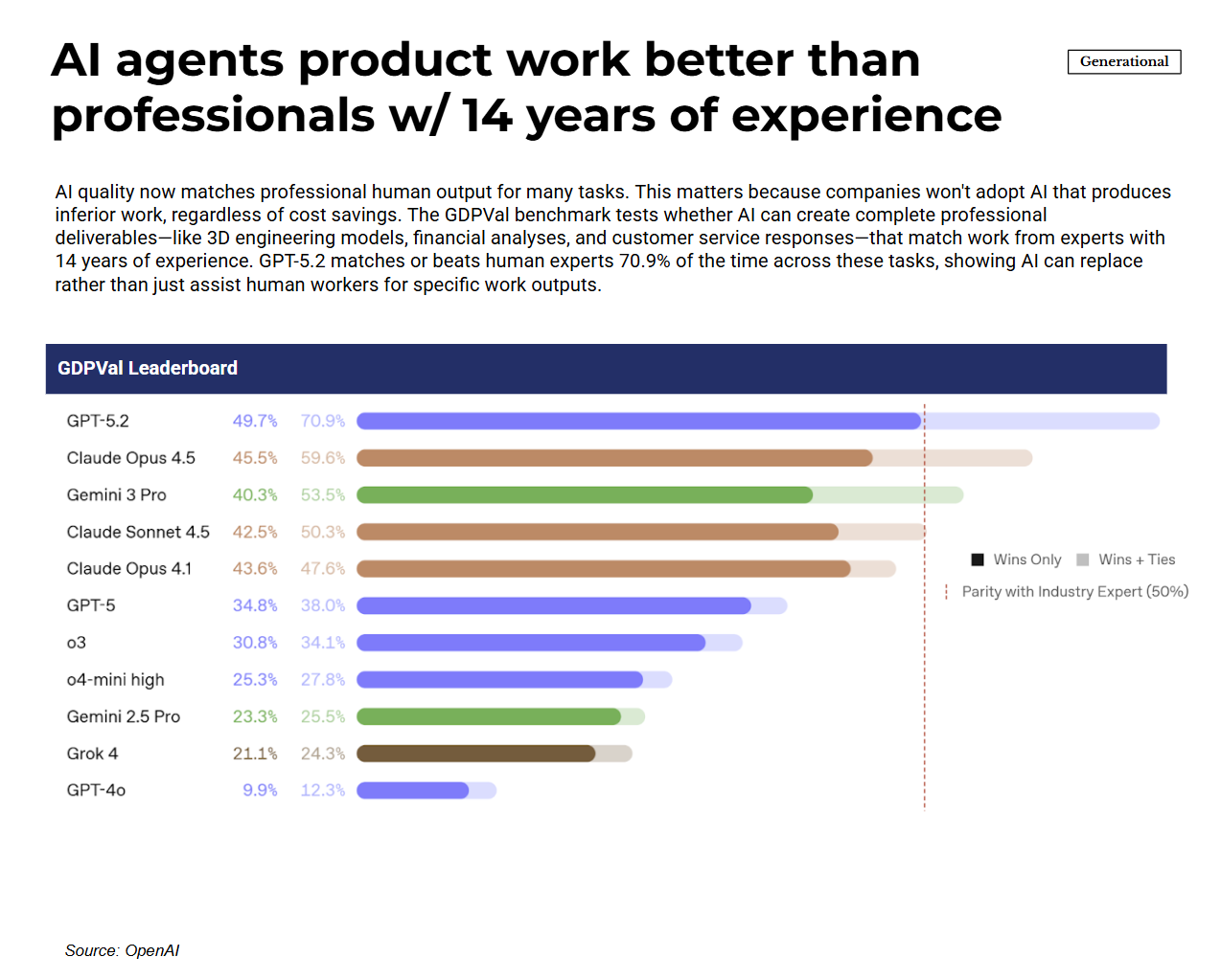
This markedly improved model capability, which showed up in benchmarks designed to measure how well models perform knowledge work. One example is GDPVal, which tests whether AI can produce deliverables that companies would actually pay for: 3D engineering models, financial analyses, customer service responses, and so on. The benchmark encompasses 44 jobs representing $3 trillion in US wages. As of December 2025, the best model matched or beat human experts averaging 14 years of experience over 70% of the time. “Matched or beat” means evaluators preferred or couldn’t distinguish the AI output from work produced by credentialed professionals.